Experiencing the Pocketbook Nostalgia

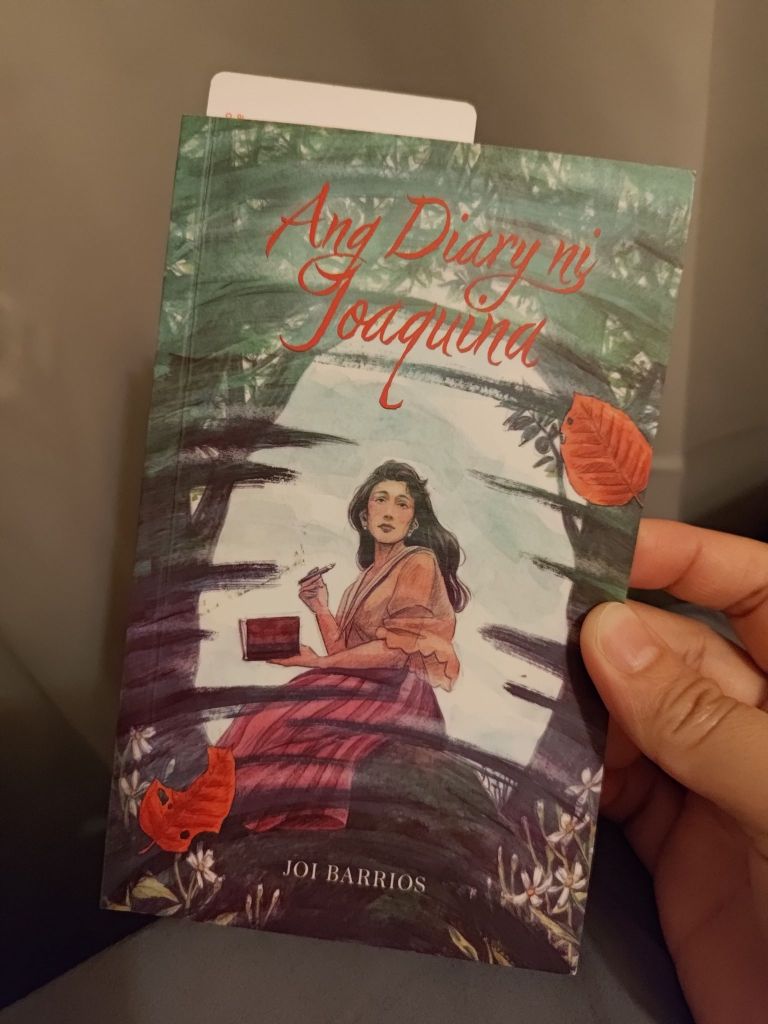
Book review of Ang Diary ni Joaquina by Joi Barrios

Long ago, I used to read romance pocketbooks through borrowing these Precious Hearts Romances for 10 pesos. This was way back CPA review school years, before Facebook. The old lady was stationed near the Book Sale-Pedro Gil Branch, just across the queues for Guadalupe-L Guinto jeepney. Once borrowed, I read it throughout the commute and return the same novel the next day, after the review classes in Business Law and Taxation (BLT).

Romance tropes are very marketable works from way back late ’90s, and almost all of them are formulaic, with unrealistic expectations, superficial dramas, and yet ends with a “happy ever after”. And even so, my 2007 kilig-kilig chenes era devoured these romantic tropes as an escape from the rigorous practice board exams.

However, if I read Joi Barrios’ Joaquina then, it would greatly elevated my reading progress from mere flimsy and mushy kaluguran daku’s since this piece of craft involves social activism as part of its world-building; these societal issues define the characters and their motivations and motions. For me, this kind of “panitikan ng pakikisangkot” should gain more traction in the Pinoy romance literary landscape. I remember reading the same vibe, albeit in English language, and that was Ana Tejano’s debut novel (with SocDev / NGOs as part of the overarching theme).

Kudos to Gantala Press for reprinting this after more than 20 years. A bit expensive though— considering the paper quality and the font size (reason for a 1 star deduction). Indeed, a main challenge for indie presses is to distribute good books at an affordable prices. I suddenly miss the 10pesos price tag in renting a book (yes, I am calling out the PH Government; please provide printing subsidies for quality books. Better yet, BUILD MORE LIBRARIES!!!)

Movement and Memento

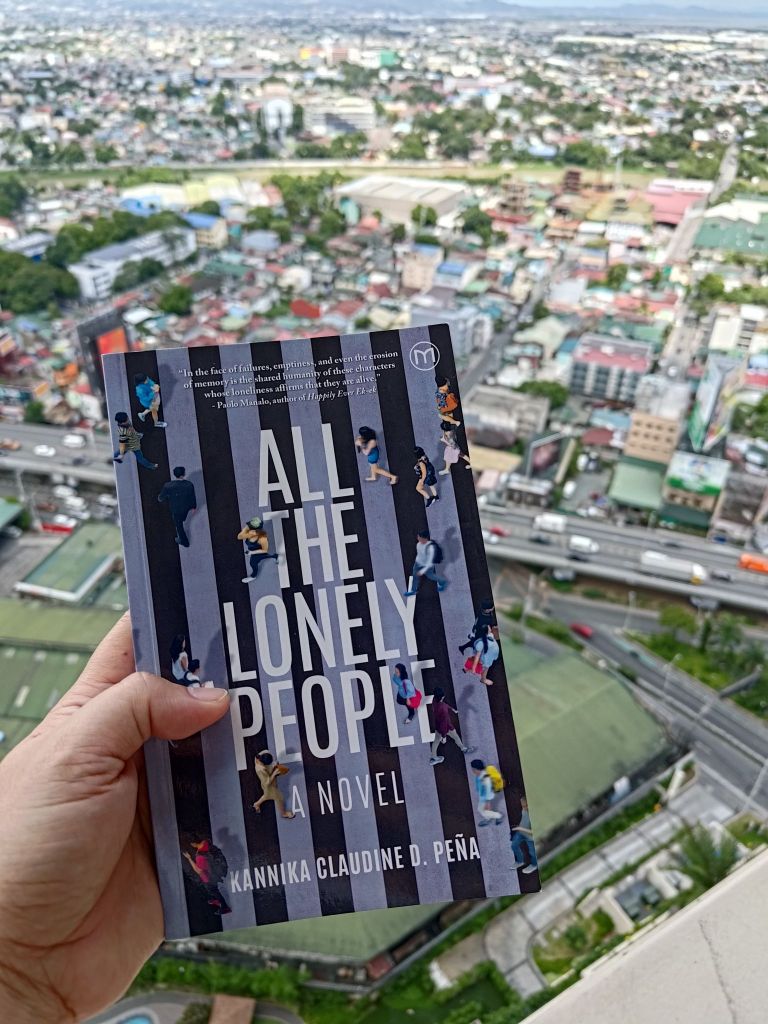
Book Review of All The Lonely People by Kannika Claudine Peña

In one of our kotse chronicles, dok bb mentioned that he doesn’t cry much because his tear ducts are tinier than any other person. Instead, whenever he feels like crying, it was his runny nose doing the deed. Whenever he feels deep sadness, he said, “kinokotse ko lang. huling hagulgol ko ay yung huling heartbreak ko eh.” I guess at least with movement, he can find his release (without judging his runny nose and his huge mess of used tissue paper).

Movement and mementos are the big themes in Kannika’s first novel of remembering loss and its adjacent emotions of grief, and how we have found ourselves looking for a company to share our loneliness with. With company comes empathy and reason, and may it not be a concrete form of happiness, but rather a release and a relief. Then hope. After all, hope if what gives us tenacity to brave the rage we experience everyday in the Metro.

Mandirigmang imortal, amirite?

If you are burned out from the daily life of the Metro, this time may not be a perfect chance to read the novel. Maybe this book is meant for people who wanted to enjoy the slow days in their homes, or want to relish the feeling of rawness of emotions. I can only opine on my reading experience, since I finished the whole book during the hours when the Globe Internet is down in Pasig area.

The six stories in the novel were done in a “hand-off” fashion, where the omniscient POV is moved from one character to another, its main goal is to share their little sob story. At the center of it all is Marya, and her own history of loss and longing for company, her sentiments poured out to the Lost and Found Logbook of the old Apartelle where she is currently working (and living in).

What I liked about the novel is how the story weaves and how it pulls the emotions out of me. I feel that my chest hurt everytime I read a snippet of their sad histories, and at some instances, I see my persona as a composite from the characters in the novel. I reflected at the what-ifs (like, if I was Gemma, will I still be ok managing my mother if she has Alzheimer’s?) I even see my work colleague in Cindy’s story. I loved how relatable the stories are.
Also, the author has effectively inserted her criticisms in our love for sad tropes (“Sadness that sells because it’s everyone’s sadness”), the dismal commute and horrendous traffic (“This city has no time for your heartbreak. So you move on”), and her leeway to explain why there are tendencies to romanticize this chaotic city (“But perhaps she’s looking for a way to feel again”). The universality of stories and the feelings it evoked within me are remarkable. For less than 30 pages, I shed my tears as if the loss was my own. Good thing I don’t have dok beside me because it is hard to explain why are you crying over a page you just read.

I think what wanes the reading experience for a bit is my introduction to Cindy’s story. It felt abrupt. It’s the sudden insertion, nothing weave-like. I was so used to the chaotic EDSA or slower moments in Pasay (where I think Via is from), and then Cindy opened her story with “Pillow crease on face.” The momentum faltered from there. And just before the novel ended, the connection was made too convenient. Also, I personally felt that the stories of queer characters (Jona and Dan Ian, respectively) are tokens of inclusivity. Nonetheless, they are relevant stories. Including their snippets means that all of us walk and manage the loneliness of everyday.

What redeemed me in the end is the seemingly magical realism / romantic narrative at the bus station that even I (as the reader) was rooting for. That was so effective! It feels like watching the final sequence of Kimi No Nawa, two total strangers on the different lines of trains getting off on stations abruptly and meeting at the Suga Shrine.

“It’s possible to be content with whatever and whoever is right there, even and especially with the knowledge that they will soon be gone, that nothing lasts forever—love, happiness, but also heartbreak, sadness, pain.” And I thank this novel for giving me back my reading groove again, after managing the more challenging novels at the first half of the year. Thanks to Kannika for giving me a chance to slow down and just cry it out and breathe.

Sa baba ay ang Universal Robina at ang C5

Snippets of the Last Frontier of Floody Manila

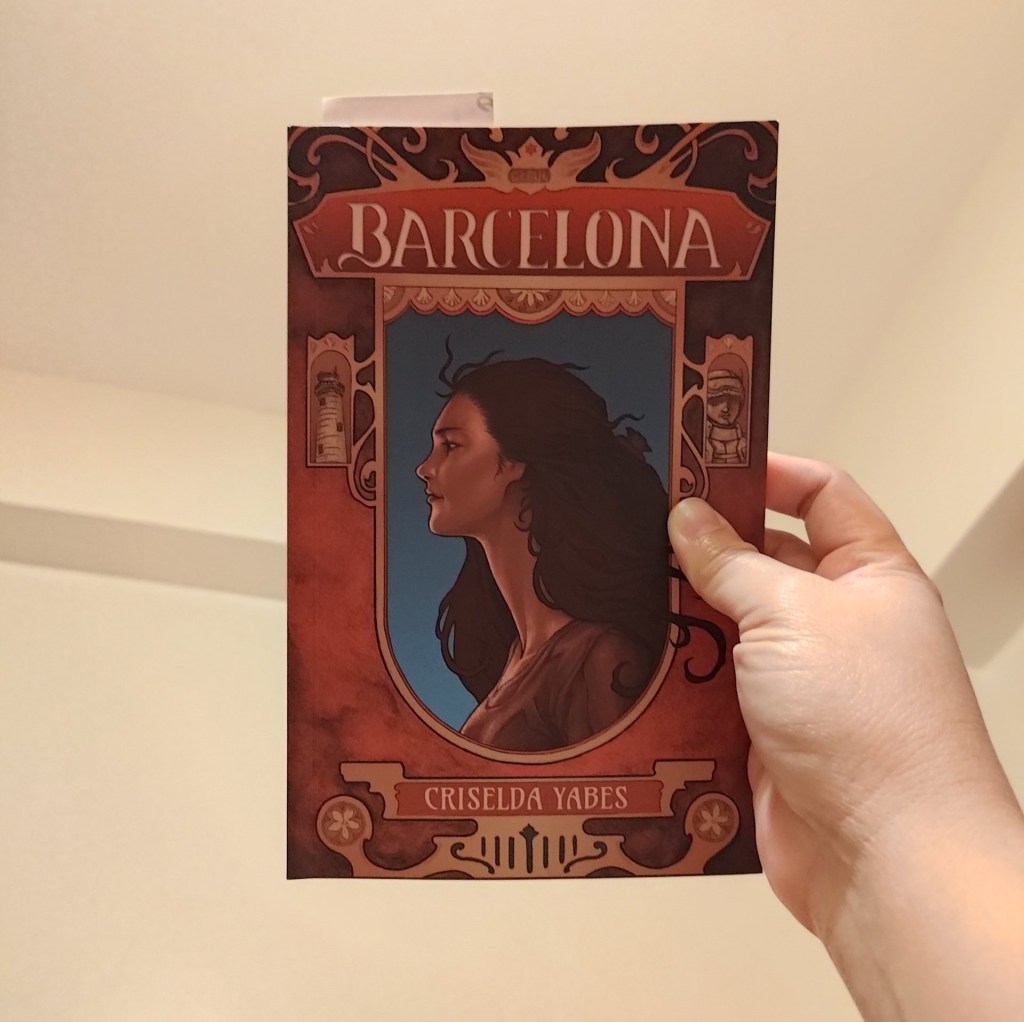
Book Review of Barcelona by Criselda Yabes

Ang ganda ng naging reading journey ko!

Nakatulong ang konteksto ng Some People Need Killing as Review of Related Literature (RRL) for processing trauma from EJK and the psyche of people who fight against the harsh reality of Drug War.

Kung ako ay may anak, ipapabasa ko ba ito? Sa isang dose anyos, oo. Kasi, 12 years old ako nang mabasa ko ang Dekada 70. At nakakagising siya ng diwa ng pagkakapantay-pantay at umuugong sa puso ang kabuuan ng boses ng tao sa aktibismo. Pero, mas maganda ito kung guided reading ng mga nakakatanda, kasi mas maipapaliwanag ng mga guro o ng mga magulang kung bakit ganun ang karanasan ni Barcelona. Ipapaliwanag ang kawalan ng pribilehiyo, ang mismong kalakaran ng droga, at yung panggagago ng mga pulis sa mga taong tingin nila ay hayop, o basura.

Naka-relate ako sa persona ni Barcelona. Na, “Ang anak ay bunga rin ng Ama”. Matandang dalaga, walang anak. Pero may mga nakapalibot na komunidad. Isa pa, may inggit rin kahit paano. Kasi ang tatay nya hindi naman masamang damo. Sadyang biktima lang ng pagkakataon. Sobrang kabaligtaran ng danas ko. Anak nga ako (ni papa), pero mas kilala ko ang mga ugali at gawi na hinding-hindi ko ipapamana. Isa pa, mas nanaisin kong basagin ang sumpa ng generational trauma sa pamamagitan ng pagtila ng pagpaparami ng lahi niya (100% ayoko ng anak, kahit multuhin nya pa ako in the near future, haha!).

Haha, mapakla ulit. Sorna.

Medyo nagulat ako sa open ending ng akda. Bakit sa lighthouse? Bakit hindi ideretso sa paraiso? Baka yun talaga ang plano ng author: ipaliwanag na ang laban ay isang mahabang marathon at hindi isang pasadang takbo.

Pagkasugat, Pagkahilom at Pagkilos

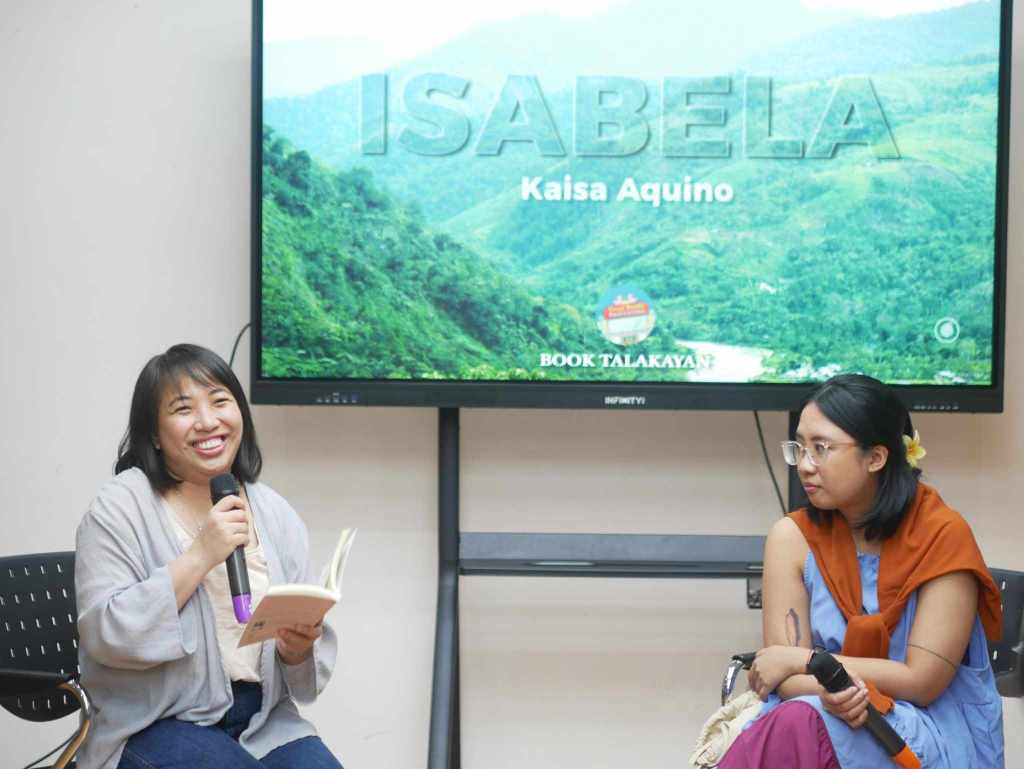
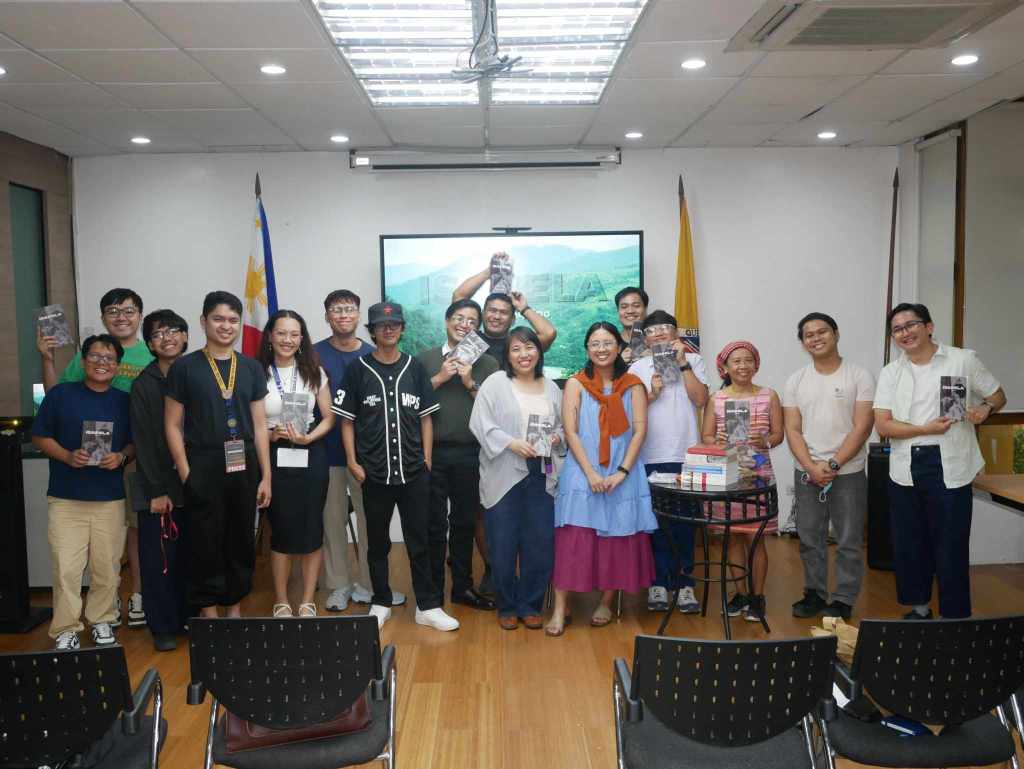
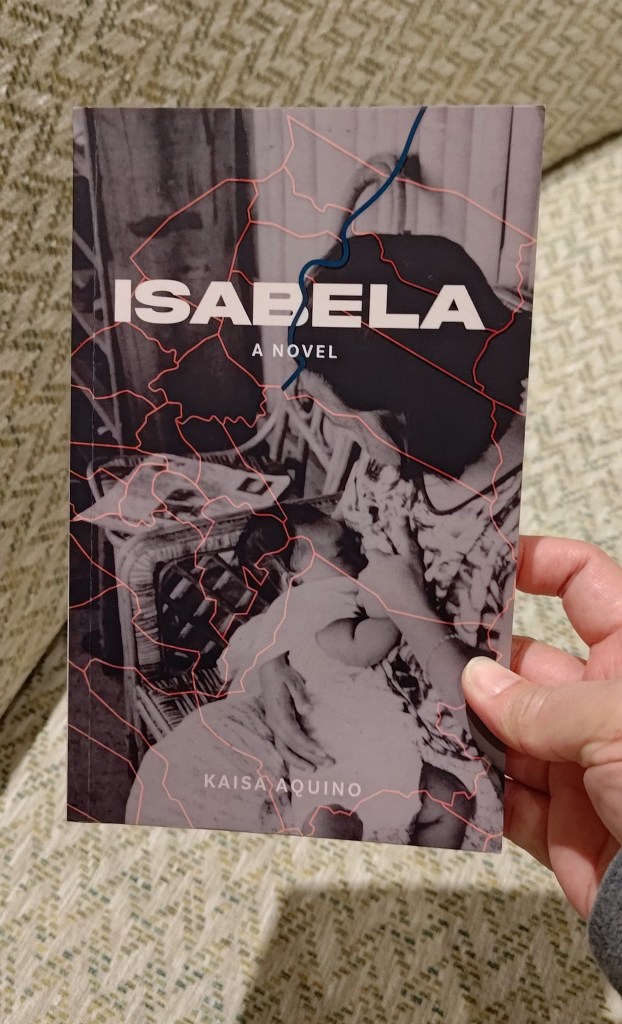
PRPB’s Book Talakayan of Kaisa Aquino’s Isabela

Last 22nd March, the Pinoy Reads Pinoy Books (PRPB) discussed Kaisa’s debut novel Isabela. To celebrate the Women’s month, #AbanteBabae was reinforced with a woman writer and a woman moderator tackling the heavy prose of the book; it’s fragmented realities and lost histories, together with the involvement of women in the movement, either directly or indirectly. Sheltered in the safe space of Quezon City Public Library, we made the discussion more friendly through the banters and jests, inviting the attendees to interject or ask follow-up questions as we go along the discussions.

We opened the BT with the introduction of everyone, knowing their names and their current activities, and who are their favorite Women Writers. Even though we are of less than 20 attendees, I was amazed that we have cited many women writers, echoing their contributions to the rich landscape of the Pinoy literary.

Kaisa, a profound Filipino word meaning “one with”, confessed that she is a 90’s kid, She explained that her name is merely a combination of two provinces — Cagayan and Isabela. With her name demystified, we also asked on how the interweaving stories came into life and how it was also blended together, crafting a composite novel from her years in her graduate school. “Thesis lang naman talaga ito eh,” she mentioned, but after the 7 years of writing grind and multiple workshops, she gave birth a tale of different women from the iterations of Isabela, overarching the theme of her hometown and its proximity from the three decades of insurgency in the countryside.

One of the questions I asked was “women and wounds”, and how Isabela’s multiple iterations received all forms of wounds — from a literal bullet, to the disappearances, to the loss of a husband, of a son, and of a father — and how they carry it through time, while coping and healing through different means. As a reader, I felt the heaviness of the prose. They carry the wounds and they keep on moving, continuing on the search and meaning, may it be a run for survival (from the military), a search for an alternative healing (tawa-tawa leaves) and a trail to summit (to see the purple hydrangeas). I even told Kaisa, “Sana ako na lang ang nasusugatan… kasi parang ang bigat na.” She answered back, “Ella, hindi ka ba nasusugatan?” Her reverse card question made me realize that I am also very much a wounded woman who soldiers on, the same with the characters in the novel.

Aside from the questions of themes, the winding narratives, and the execution of prose, the members also shared their reading experiences. CL mentioned how the multitude of characters and iterations were effectively executed. Kwesi asked about redefining the work from his first impression that Isabela is a collection of short stories. Jaffy digressed that maybe the novel is a proposed reality from the current socio-political climate we are in. Jayson shares that he sees the sentiments of regrets and its fragmented stories of struggle. Lawrence apologizingly confessed that he found the open-ended endings of each chapter difficult to ingest, a journey very challenging to trek because of the shifts
of the point-of-view and genre of realism and magical realism. I guess his reading experience feels like a tiring hike, its summit filled with fog. Meanwhile, my reading experience feels like away from the mountains. I shared the metaphor of anchorage and voyage via the novel’s prologue and ending; a ship lifting its anchors (the norms imposed on women), readying itself for another journey (of going home).

Miss Thelma, a retired teacher and a guest of our Book Talakayan, did not ask Kaisa any questions about the latter’s craft and poetics, but thanked her instead. She was grateful that someone has written about her province. In her mellow voice, she told us that their shared hometown is filled with stories of beauty and activism and after a long time, Kaisa was able to put them in paper.

The final question came from Rikkimar, a PNU student. “Paano natin mailalapit ang akda sa mga taong malayo sa danas ng nasa libro?” To which Billy jokingly answered, “Eh di ipabasa mo.” And I believe Kaisa agreed, because one way to reach the other’s heart is through a shared experience and building through a community of reading.

I ended the #BookTalakayan citing this page 77 of Isabela, its prose a perfect description of a suspended reality:

“Ka Abel says that they’re here. This is the place. Just as they cross over the bend of the meadow, without warning whatsoever, the landscape changes, as if a cloth lifts, and all they can now see are the purple hydrangeas. They are all suddenly still, stunned by the unreal view, like a fantasy. The world tilts heavily as they take in the whole landscape. It’s marvelous.”

A day after, I still remember the echoes and sighs of this discussion I moderated. And I realized, this book club can appreciate the stillness of beauty among the chaos of the mad world.

What Shit in this Shitty World

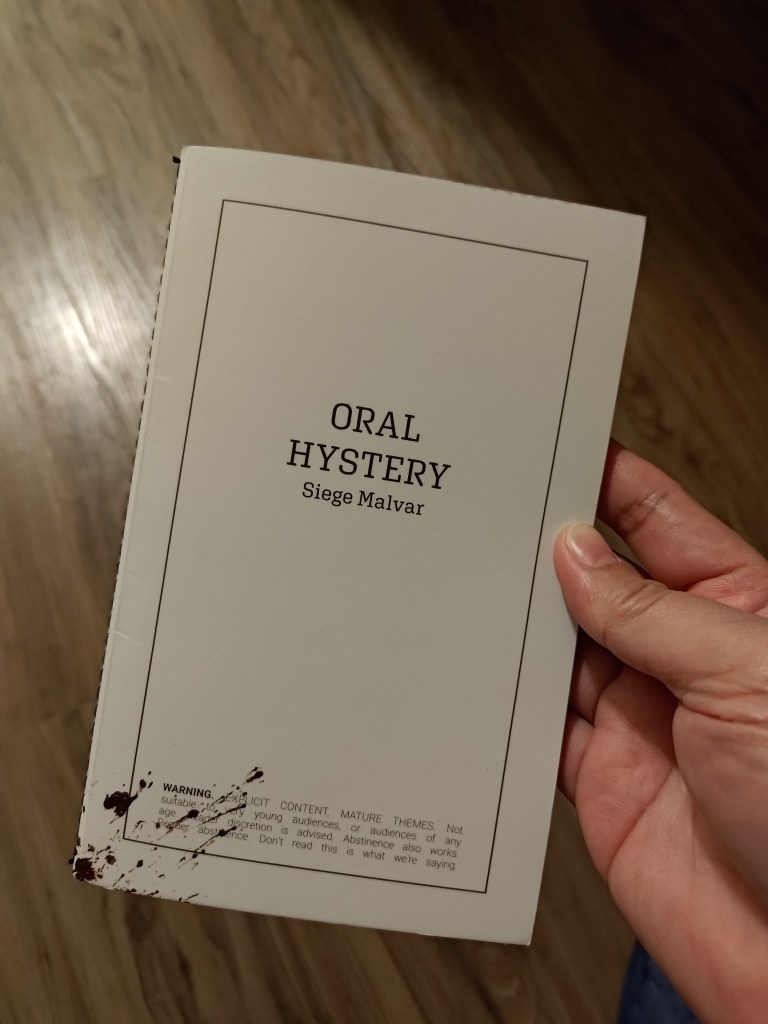
Book Review of Siege Malvar’s Oral Hystery

I don’t even know if I can make a perfect review to describe the reading experience of shit in a shitty world, and how virality and a playbook of disinformation shapes the collective psyche, or gusto na lang ba natin na mag-shutdown ang META because that US stock is just leeching off from our never ending attention span of a goldfish. Hindi ko mai-articulate nang maayos, pero sadyang kapag lumubog ka sa kaka-selpon mo, lulubog din ang brain cells mo.

Although self, pat in the back ka: good job in selling this novella! This is indeed Chuck Palahniuk’s Choke in Filipino. Yun nga lang, sa ibang butas lumalabas ang dumi. Taena, tae nga. Also, instead of a newspaper-interview-circa-1979-style of Taylor Jenkins Reid’s (aka TJR) Daisy Jones and the Six, Siege crafted the pages like a facebook news feed, circa 2009 (kasi walang profile picture; parang lahat sila, kakagawa lang ng fb profile way back then). It was easier to navigate, compared it to a script-like format of TJR. Instead of being bored to a long thread of lines, it felt like watching a very long KMJS segment of virality and monetization, and shaping the pop culture and polpolpolitics.

Small note on pages 47 and 48, the inflections of taenfluencer: the editor could have removed the parentheses of (Proudly) and (Derogatory), respectively. Marami kasi makaka-gets upon second read. Or maybe it stayed because more GenZ readers recently post the punchlines in socmed with these ~moods~ as ~aesthetic~.

Let me digress with a meme:
~Mahal kita at ang sakit-sakit na!
~sinaksak ang sarili
~Aray (umiyak)

I’ve also felt Siege’s sheer hate with advertisements and targeted marketing and his frustrations of not earning dollars from his previous novel named Charged, a selponserye which is a stark contrast with Vince and Kath. Vince and Kath was a wildfire, transcended into a wattpad/pop fiction and soundtrack and movie rights, while his work created a sleeper hit, million engagements, and yet, it only birthed as a 3-part-novel (two of which are now “shelf items”, considering the speed of change in the social media space.) Charged is now an artifact of the pre-pandemic and pre-AI era.

And I get the frustration. Kahit akong gustong magpasa ng manuscript sa Avenida, hindi ko pa matapos kasi kulang sa panahon. Wala rin akong stamina kasi nakakapagod maging accountant. At least ikaw Siege, nakakapag-katha man ng isang magulo at maruming kaek-ekan, pero nananawagan pa rin sa mga tao na wag maging Bobalyn at huwag lalong maging Pvblicity Media.

Naalala ko yung recent game walk through na napanood ko sa youtube: We are what we Behold. A game version of this book, sans the tae, but explain how our eyesight lures into a trendsetter, and slowly letting us go into a chaotic world we build ourselves.

Hopefully, through reading this book (and through reading as a lifestyle), we lift ourselves a bit away from the chaos we have made. 

Epistolary Rebyu

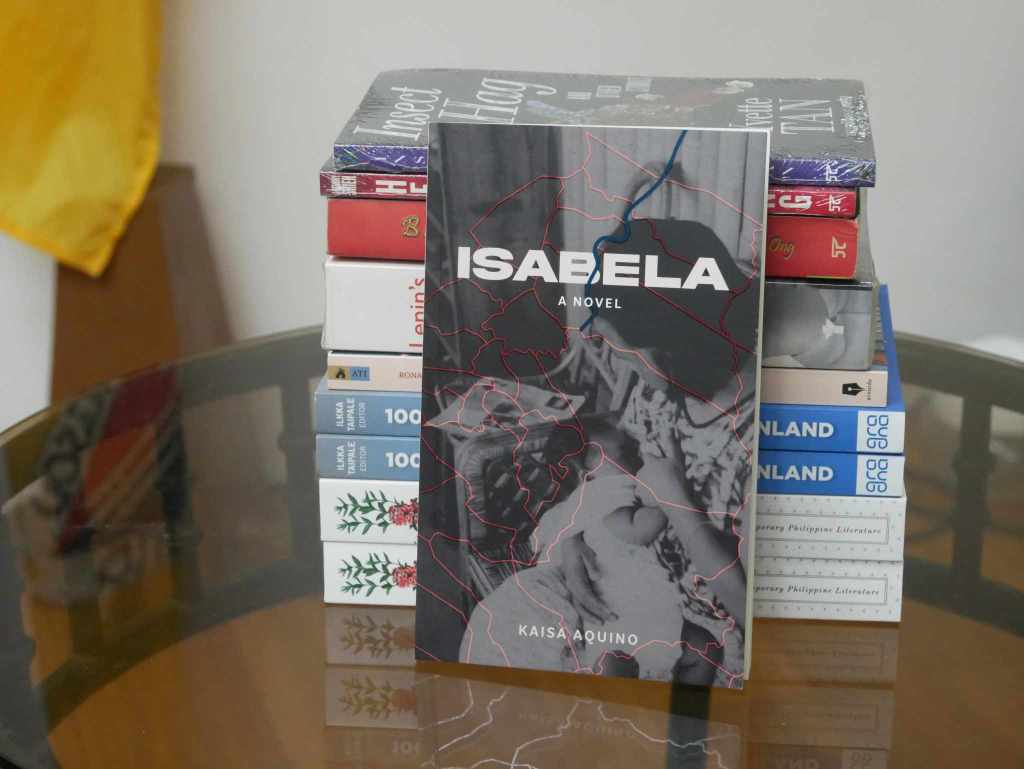
Book Review of Kaisa Aquino’s Isabela

Dear Dok bb,

Nag-alala ako slight nang hiningi mo ulit yung phone number ko sa minsanang kwentuhan natin sa IG, sabay kumabig ka ng “Grabe ang barilan dito sa Mindanao, patayan basta pera.” Sinagot kita ng “Umuwi ka na, giyera ang lugar na yan.” Pero alam nating pareho na hindi ka basta uuwi, kasi maliban sa tawag ng pangangailangan pinansiyal, ay alam nating pareho na mas tinatawag ka diyan ng iyong propesyon, lalo na’t ang onti ng doktor na nade-deploy sa Marawi.

Katulad kong sumasabak sa adhika ng pagbabasa at pagsusulat (habang ka-dribble ang pagiging Banker), sumusundalo ka rin bilang IM consultant at EM doctor on call. Pareho tayong alipin ng propesyon, pero palaging nasa bulsa ang panawagan ng aksyon. If the Lord is watching from afar, sana naman gawan ng paraan na magkalapit tayo. Kasi, mahirap ang pakikibaka sa araw-araw nang magkalayo ang mga puso.

Pero sa pagbabasa ko nitong unang nobela ni Kaisa Aquino, bigla kong na-realize na ang bawat kilos natin, may impact pala sa tao na hindi natin aakalain. Itong ambag nating social activism, maybe big or small, ay humuhubog sa ating pagkuwestiyon sa “ok na to!” ng kasalukuyan. Gusto nating pareho ng pagbabago, pero hindi natin kasingtapang ang mga namumundok. Gusto nating labanan ang mga demonyo, pero sa dami ng nasa paligid, tila bumabangon tayo sa bagong apokalipto. Kahit yung pinupush kong “shaping pinoy literary landscape, one story at a time” kineso hindi ko basta i-lezzggooo! Mahirap kapag ang sistema, nakakapit pa rin sa galaw ng salapi, sa mga “what’s in it for me?” at sa iba pang mekanismo ng kaperahan at kapitalismo.

Binigyan ako ng hopecore malala ng mga kabanata ng Isabela. Dito kasi, binigyan nya ng boses ang mga babaeng umiikot sa mundo ng pag-aklas. May mga mas matapang sa akin na tinamaan na ng bala, may mga chill lang na propesora. May mga burgis din na gusto lang mag-rebelde noon, pero de-kalibre ang network ngayon. At may katulad kong nagta-trabaho, pero may kipkip na kagustuhan ng pagbabago sa bawat pagbangon. Grabe dok, my crying time and my hormonal rage biglang nagpi-peak nang hindi ko akalain! Sobrang naka-relate ako sa kwento ni Belay at Balong, kasi yung bonding ng magkapatid nakita ko yun sa amin ni Kuya. Sobrang nainggit ako sa kwento ni Celine at papa niya, kasi alam nating pareho na hindi ganun ang tatay ko. UP Graduate lang yun si Papa, pero isa siya sa mga naki-network sa mga heneral para pumaldo, bago ipang-casino. Lol biglang pumakla, sorry dok. Pero sa bawat kwento ng Isabela, tinutunton ako sa mga lugar na malayo sa galaw ng aking propesyon. Tila lumiliit ang lente sa pagtikatik ng keyboard at hum ng standing desk, at mas tinatanong ko ang sarili: Kaya ko pa bang sumigaw ng paghihimagsik kung ang mundo ngayon ang mismong sumisikil sa aking tinig?

Kasi, kung aklas rin lang naman, tbh, count me out. Hindi ko kaya malayo sa danas ng peti-burgisan. Hindi ko kaya magbitbit ng armas at pumunta sa kanayunan. Hindi pa bayad ang aking mortgage, at hindi ko pa nakukuha ang retirement. So kapag ako’y biglang ma-redtag, baka forever na akong maging pipi online at offline. Hindi ko rin masisisi ang mga Raphael / Apa sa nobela. Kasi hindi ko personally alam ang tindi ng dahas ng mga taong armado. Nakarating na ako ng abroad nito, ha! Paano pa kaya kapag binabasubas pa ang maliliit na tao?

Kaya katulad mo, minamahal natin ang bayan sa paraang alam natin pareho: tumutulong kapag may delubyo ng bagyo. Proud ako sa tapang ni Kaisa na ikwento ang iba’t ibang anino ng hinagpis kapag hinahagupit ng bagwis (ng bagyong Harurot): ang pagkawala at bawat pagmulto ng ating mga mahal sa buhay. Even the aftermath of grief is being written poignantly through Celine’s everyday.

Tapos dok, di ba napanood mo na yung Kimi No Nawa? Yung magic ng timeline jumps and long distance connections? May magic din yung libro! Hindi sya tuwiran, like speculative fiction ah, pero yung mga pangalan nila magkakarelate! Parang akong meme (yung manong na may mapa sa likod nya!) nang sinubukan ko ilista ang mga tauhan at paano sila nagko-connect. One example na yung mga Raphael at mga Caloy sa iba’t-ibang kabanata, pati yung mga Isang / Issey / Sabel / Belay! Akala ko, iisang tao sila, hindi pala! Parang echo lang — iba’t ibang pagkatao— but for some reason, pare-pareho ang nagiging life decision. Hindi ko mai-explain nang maayos, haha! Basahin mo na rin kasi! Puru ka kasi high fantasy eh. Kaya tayo hindi nagkakaroon ng buddy read kasi magkalayo ang genre na binabasa natin.

Saludo ako kay Kaisa rito, dok. Kapag natatanong ko sa sarili ko, anong ambag ng isang akda sa pambansang panitikan, eh medyo malaki ang ambag ni madam. To think na kapwa babae din sya huhu, #AbanteBabae! Lavarn pak ganern she is contributing another resistance piece for us to stop look listen and learn! Eme!

Dito na lang muna, ang OA na ng liham ko sa haba. Book review talaga ito dok, hehe. Pero kung mababasa mo man, pakituldukan. Bago tayo magbangayan. Tuldok mo lang masaya na ako, char. Pero gusto ko rin magpa-baby, abah! Hindi yung forever akong hyperindependent strong woman of the nation! Ako ay tao rin lamang at naghahanap ng labing-labing.

Hopefully soon, ang mame-message mo,
“Malapit na ako bb pauwi na ako.”

See you when I see you,
Banker bb

Booktokish: Snippets of Content Creator

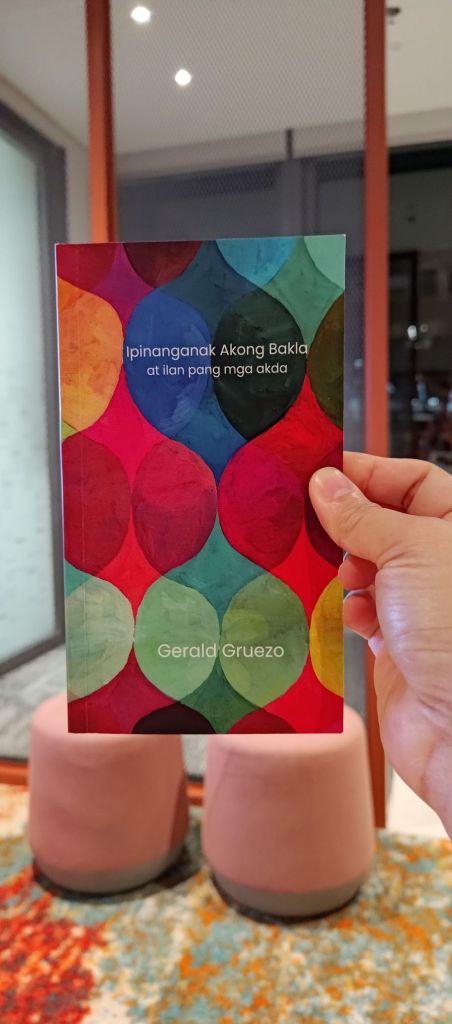
Book Review of Gerald Gruezo’s Pinanganak Akong Bakla at ilan pang mga akda

Nakakabitin!

Tunay ngang patikim ang mga akda niya rito sa litol chapbook niya! Maraming salamat sa Akdang Pinoy dahil nanalo ako sa raffle nila, at plano ko sana itong ipa-raffle papunta sa ibang interesado ng kanyang mga akda, because sharing is caring! 😉

Limang titulo ang narito. Yung unang apat, kwentong buhay niya. Pagpapakilala niya, ganun. Catchy ang unang akda kasi andaming em dash— alam mong madaldal siya sa personal (with lots of social media channels, andami nga niyang nagiging engagement!). Isa pa, parang nakapagbasa ka rin ng blog entry sa Una at Ikaapat niyang entry sa libro. Yung ikaapat, sobrang conversational. Bigla kong naalala ang Unang Reglang kwento ni Beverly Wico Siy sa una niyang Koleksyon na It’s a Mens World. Ang galing lang.

As a geriatric millennial, I recommend the teenagers and younger GenZ demographic to try his works. Lalo na yung huli niyang entry dito na pinamagatang “Unang Kabanata”, kasi promising ang fiction. Pwedeng pocketbook na folklore, pwede ring tungkol sa mga kwentong bayan ng Quezon (kung saan siya lumaki). Sana masubukan nila basahin ang libro (kahit limitado ang kopya, baka naman may reprint ang Balangay in the future di ba?)

I also would like to commend Balangay Productions as the publisher kasi ang ganda ng kulay ng pabalat. Nakakahalina. Pati yung print ng font at ang edit ng mga gawa, malinis. #SanaAll aesthetics is life, charot. Kapag nag-reprint ito, wagi ang mga followers ni @geraldthebookworm for sure!

“Bawat Kislap ng Mata Mo ay Ano?” 

Lo-fi Aesthetics, Lyrical Obscurity, and the Construction of Meaning in Contemporary OPM

The fluorescent lights of a specific supermarket in Estancia Estates buzzed, casting a sterile glow over the meticulously arranged aisles. It was a Sunday afternoon, the air thick with multiple aisles of household needs — meat and vegetables, to kitchen cleaning items, up to the beauty section in the middle of the toiletries and toilettes. I was there, ostensibly for groceries, targeting a PHP 1,500 spending, but to make my chore a bit interesting, I tuned to the melancholic melodies of Dionela, a new discovery, his music streaming from my phone, a small island of calm amidst the consumerist chaos. 

“Marilag” played, the familiar intro washing over me. But this time, something was different. I noticed the faint echo of an FM radio broadcast in the distance, a disembodied voice announcing the date: “September 20, 2005.” This unexpected intrusion, this ghost of a past broadcast, piqued my curiosity. Why this date? Was it a deliberate inclusion, a hidden message, or simply a sonic artifact, a byproduct of the lo-fi aesthetic that permeated his music? This seemingly insignificant detail, however, foreshadowed the disorienting experience that would soon unfold as I delved deeper into Dionela’s discography.

Dionela’s music, with its hazy textures and melancholic undertones, had quickly become the soundtrack to my life. It was the perfect accompaniment to my grocery shopping, the background music for my sacks of rice, the sonic balm for my anxieties with processed chicken and beef. Yet, as I delved deeper into his discography, a nagging unease began to surface.

The lyrics, while undeniably poetic, often felt… elusive. Lines like “D’Amalfi in a bar” and “Au in a Goose” floated by, intriguing yet ultimately meaningless. They were like cryptic messages in a bottle, beautiful in their obscurity, yet ultimately unsolvable. Was this intentional? Was Dionela deliberately aiming for ambiguity, inviting listeners to project their own interpretations onto his enigmatic verses?

This question, I realized, was the crux of my dilemma. Dionela’s music, with its emphasis on atmosphere and sonic texture, seemed to prioritize ambiance over narrative. The lo-fi aesthetic, with its intentional imperfections and grainy textures, created a sense of intimacy, a shared secret between the artist and the listener.

However, this emphasis on the sonic experience can sometimes overshadow the lyrical content. At its core, lo-fi is about finding beauty in the imperfect and unrefined. It is a counterpoint to the hyper-commercialized, overly produced content flooding mainstream media. Instead of striving for perfection, lo-fi embraces the raw, the unfinished, and the nostalgic.This emphasis on authenticity, on the imperfections of analog recording and the embrace of sonic imperfections, creates a sense of intimacy and authenticity. It invites the listener to “get closer,” to appreciate the nuances and subtleties of the sound.  

While the lo-fi aesthetic champions the beauty of the imperfect, it should not come at the expense of the authenticity of the lyrical message. Furthermore, the listening experience was disjointed by my own tendency to mishear lyrics. I vividly remember mishearing the line “Ibigin ka’y drama sa teatrong upua’y limitado, Bawat kislap ng mata’y kawalan, oo” as “Ibigin kita’y drama sa upuang ginawa mo, bawat kislap ng mata mo ay ano?” This mishearing, while seemingly minor, significantly altered the meaning of the song for me, highlighting the importance of clear and concise lyricism in conveying the intended message.

In Dionela’s “Sining,” the phrases like “Pinasala’y ikinamada / mo Binibining may Salamangka” felt incongruous with the otherwise smooth flow of the music, as if a disaster should be manually organized by fictitious persona. The juxtaposition of the archaic ‘ikinamada’ with the modern, almost casual phrasing of ‘Binibining may Salamangka’ creates a sense of dissonance, undermining the intended emotional impact of the song. This disjointedness, further exacerbated by the occasional miss of the musical beat, hinders the listener’s ability to fully connect with the lyrical message. Moreover, the phrase “You’ve turned my limbics into a bouquet” felt not only grammatically and medically impossible (limbic system is a singular noun that controls (1) Behavior, (2) Emotion, (3) Motivations, and (4) Memory), but also metaphorically jarring, its attempt at poetic flourish coming across as pretentious and ultimately distracting.

This elusiveness, while perhaps intentional, can be frustrating for listeners. In a world saturated with information and instant gratification, the demand for immediate comprehension and clear meaning is strong. Dionela’s music, with its emphasis on ambiguity and the subjective interpretation, can challenge this expectation, potentially alienating listeners who crave a more direct and accessible form of communication. “Oksihina,” in particular, became a personal pet peeve. Aside from gender-bending the Tagalog word for the Oxygen, the song title has been stylized in a Filipino slang that can be mistaken as a Japanese loan word. In my mind I asked, “If the muse is Oksihina, then what is the persona – a Carbon Dioxide?” The lyrics, we felt, were fragments of thought, poetic musings that lacked a cohesive narrative. They were beautiful, yes, but ultimately frustrating in their ambiguity. Also, the deliberate insertion of the bridge to mask it as a hidden message is only a reversed typeset of the first stanza from his lesser famous song “Musika”. It may be amusing to the other listeners (and can highly be mistaken as a regional language), but what is the intent of inserting a totally different concept and not even a tangent with the muse being the reason of existing? Am I missing the point? Am I too caught up in the search for meaning, for a clear and concise narrative, to appreciate the beauty of the ambiguity?

Perhaps this was the point. Maybe Dionela was not concerned in telling stories in as much as he was interested in creating moods, in evoking emotions. Maybe the music was not about conveying a specific message; it was about creating an atmosphere, an emotional landscape for the listener to explore. The “meaning” was not in the lyrics themselves, but in the quirks between the notes, in the way the music interacted with the listener’s own internal world. These lyrical oddities, while perhaps intentional, served to disrupt the flow of the music and hindered my emotional connection with the song. It felt as if Dionela was more concerned with impressing the listener with his gimmicky vocabulary and hipstery-malalim-na-tagalog allusions than with conveying a genuine, authentic message. These seemingly random and often obscure references served only to distract and frustrate. They felt like buzzwords, designed to impress rather than to communicate. I found myself constantly searching for hidden meanings, trying to decipher the cryptic messages, but ultimately feeling more lost than enlightened.

Dionela’s linguistic gymnastics, reminiscent of Facebook and TikTok influencers using deep words and non-vernacular vocabulary to seemingly uplift the authenticity of the work, ultimately backfired. The artificial mix of old Filipino words with a totally new slang, coupled with the misalignment of lyrics with the musical beat, created a sense of dissonance that disrupted the intended emotional impact. This “brain rot pattern,” as I have come to call it, was further glazed with a low fidelity tune that becomes relaxing and numbing between the left and right ears, subliminally making you ignore the poetics of the craft. After all, lo-fi is supposed to vibe and not critic.

After picking that 5-kilogram sack of Jasmine Rice, I went straight to the cashier. The musical experience mirrored my tape receipt. The spending of PHP 3,343.18 doubled the initial budget, driven by a strange impulse fueled by the same kind of “lo-fi” experience – the soothing background music, the dim lighting, the effortless flow of the shopping cart. I emerged from the supermarket with a mountain of unnecessary items – a surplus of paper towels, a collection of hair ornaments I did not need, and, most tragically, no broccoli for my planned stir-fry. My Sunday experience mirrored the effect of Dionela’s music – a pleasant, even enjoyable experience, ultimately leading to a sense of disconnect from my original purpose and a slight feeling of regret.

Perhaps we are in a dystopic social media phase where we must re-engage with an art that numbs us from the realities of the world. The allure of the lo-fi aesthetic, with its promise of authenticity and intimacy, can inadvertently mask a deeper engagement with the art itself. In the pursuit of creating a “mood,” we may be inadvertently sacrificing the power of storytelling, the ability of art to challenge, to provoke, to truly resonate with the human experience.
A Look at Life and Love through Hiking Trails

Book Review: You are Here by David Nicholls

Upon receiving the kindle version of this novel, I thought to myself, “Wow, this could be my new life manual”, and I harked at the imagination because (1) I expected this to have less passionate and more pragmatic leads, and (2) I haven’t hiked Cumbria, only Pulag (and other mountain regions of Luzon) and Japanese alps.

The topography of the walking trails seemed to be wet and muddy even on the UK Summer as I read along, and it kind of contributed to the charming vibe of the reading experience. Marnie, the copyeditor who attained the WFH gig post pandemic lockdowns, finally embarked on a trip to the Northern England as she was seemingly forced by her friend Cleo (because the latter wanted the former to be “out there”), and met Michael, the geography teacher who has a complicated marriage.

What I find fascinating about this novel is how David inserted the narratives of the characters in the trails, describing the mood and the cadence of the story with the section of the trails they traverse. It’s very much different with Philippine mountains and terrains, but I am a bit envious that he was able to infuse the socially awkward conversations, and gushing then to lashing and those silent heaving moments. I remember hiking Batolusong with a tinder date and I only have heaves and sighs and random “tara, magpicture tayo dun!” because the mountains of Rizal is very hot in the summer. Maybe trekking Cumbria for ten days is good to win over a random friend (or a potential romance), or at least a good checkpoint if your special someone is still into you.

With all these walks, I find myself relatable to Marnie, as she has okay livelihood, sometimes sadgurl but oftentimes content. She has the discipline and a strong work ethic, hyperfocused on the deadline, and there are moments that she wakes up and simply looked at the ceiling. She has the moments where she is wary of romance, some snippets of curating her anecdotes, and trying her best to compartmentalize her breakdowns. What I can advise Marnie is that she can schedule her “crying session”. That way, she can be more productive when deadline is nearing, haha.

I also liked the open-ended tone of the novel, very much different from my OG life manual called One Day. Practicalities do come as a higher priority when you get older. Nonetheless, you have all the right to be hopeful and YOLO. I enjoyed my long and in-and-out reading pace because I have the leeway to check Cumbria on Googlemaps and hopefully save up some money to simulate the same in the future.

Kilome-kilome-kilometer Zero

Book Review: Kilometer Zero by Josue Mapagdalita

“Ella, kahit wala kang kotse, bakit kabisadong-kabisado mo ang dinadaanan natin?” Ito ang naging tanong ng isang officemate nang hinatid ko papuntang Ugong, ang barangay malapit sa aking maliit na bahay. Nang mabanggit kong nabatak ako ng patok jeep hits ng Stop N Shop-Cogeo ay natawa na lang sila dahil sa kwento ng nakabibingin biyahe na tumatagal dahil sa tindi ng trapik.

Tulad ng aklat na ito, ang haba ng binayahe ko:

1. Nakita ang sample sa Philippine Book Festival

2. May nagchismis sa PBF na mahilig magparaffle ang manunulat (kaya hindi binili)

3. Umasa sa Nakita sa Booksale pero Hindi Binili (wala pa rin akong badge!!!)

4. Nagdownload ng PDF format mula sa page ni Josue Mapagdalita (pero ang gulo ng PDF stamp sa bawat pahina)

5. Umasa ulit sa ikalawang raffle ni Nakita sa Booksale keme ang dami ko pang nai-tag na tao, nandamay na

6. Nanalo ng ibang libro sa Akdang Pinoy

7. Nag-binge hike sa Japan

8. Sumuko na at bumili na ng signed copy (salamat sa pa-message! sobrang na-appreciate ko!!!)

Ngl, nang mabasa ko ang unang kwento, nasa isip ko na baka pang-Young Adult ito — typical for teenager readers. Samahan mo pa ng makulay na pabalat ng aklat. Mapapa-uwu ka if teenager ka, pero sa tulad kong konting pikit bago ang kwarenta ay medyo na-weirduhan sa sarili. “Clickbait ba ito? Baka puru ganito, hugot na naman ba ito? Recycled content na ata ito eh!” Pero katulad ng bawat commute, samu’t-saring danas pala ang maba-vibes mo sa bawat kwento. Best to read the book one story per commute. Maganda talaga syang bitbit sa iyong byahe, na kaysa maburyo ka sa pagpila sa terminal, or mapasinghal ka sa puru pulang kotse ang nakikita sa daan, eh mahihigop ka sa mga sansaglit na sentimyento ng bawat dagli. Bigla kong naalala ang Suong ni Gerome Nicolas Dela Peña – ang koleksyon ng kanyang mga tweet. At gaya ng sa Suong, pwedeng simulan sa gitna ang aklat, tapos pwedeng mag-lipat-lipat. Dahil kung tutuusin, ang bawat biyahe natin ay hindi isang sprint, kundi isang marathon — isang combo ng samu’t-saring uri ng lakad at takbo.

Nagustuhan ko ang mabilis na dama ng sensibilidad, dahil naging intensyon pala ng manunulat na walang gender ang mga tauhan. Without gender assignments, we can lure ourselves in the stories with the touch of our personal histories and sagas. At mas nagustuhan ko ang “alingawngaw” ng koleksyon. Mula sa personal na hugot ng pag-ibig, lumalawak ang boses sa mas malaking mga bagay sa paligid: ang iba’t-ibang baitang ng manggagawang uri; ang hindi pagtuong-pansin sa ating personal na lagay (Mental Health) sa ngalan ng pag-grind; ang pagtalikod sa pinagmulang bayan at pangarap sa ngalan ng mas maalwal na buhay; at ang natitirang pait ng mga lumisan sa iyong buhay (Side note: sobrang nadali ako ng kwento na may biyaheng Sucat, nalungkot ako sa sarili kong mga college friends na hindi na nagkikita mula noong rehimeng Duterte, pero bago ang 2016 ay ang hilig na naming magreklamo kapag papuntang Town).

Sa larawang ito, nasa likod ng librong ito ang aming barangay hall. At base sa google maps, 18km ito mula sa Kilometer Zero. Wala lang, share. Pero maraming salamat sa akdang ito. Na-pwera-usog ang kagusutuhang kumpletuhin ang personal na sanaysay ng mga ligalig at lakbay (na hopefully, matapos ko nang matindi-tindi kasi puru pa rin sample size ang naipapasa, haha!)