Feel ang moment ko parang… wao, that’s greyt. Parang, computation. Parang… iz breathless with all the felt. It’s breathless in the moment of life. FOR THE FUTURE! Moment of life for the nature… parang nature ang nararamdaman ko…
So, we did a talk in the Philippine Book Festival on how the PRPB started before the surge of the facebook as the main source of discussions and announcements, the dynamics of the pre-pandemic years, and how the new era of members and more inclusive representation reshaped our book club and how it kind of contributed to the community of writers, publishers, and new audiences of the written word.
I am happy and very much humbled to be a moderator of this relatively flat organization that keeps doing all these collaborations with the authors, academic groups, and national institutions — and all pro bono, for the sake of the love of reading. I do hope that we can maintain this third space for the years to come. And even though we grow old and gray (wao, tumanda na ako rito sa grupong ito. IMAGINE 13 YEARS!!!), we hope that we have the young ones to keep the momentum going.
Sana proud ang pinakamatandang founder namin. Na heto na ang book club niya na akala niya puru field trip lang noon. Narito na ang PRPB, umaambag na sa pambansang kaganapan ng panitikan.
Nag-alala ako slight nang hiningi mo ulit yung phone number ko sa minsanang kwentuhan natin sa IG, sabay kumabig ka ng “Grabe ang barilan dito sa Mindanao, patayan basta pera.” Sinagot kita ng “Umuwi ka na, giyera ang lugar na yan.” Pero alam nating pareho na hindi ka basta uuwi, kasi maliban sa tawag ng pangangailangan pinansiyal, ay alam nating pareho na mas tinatawag ka diyan ng iyong propesyon, lalo na’t ang onti ng doktor na nade-deploy sa Marawi.
Katulad kong sumasabak sa adhika ng pagbabasa at pagsusulat (habang ka-dribble ang pagiging Banker), sumusundalo ka rin bilang IM consultant at EM doctor on call. Pareho tayong alipin ng propesyon, pero palaging nasa bulsa ang panawagan ng aksyon. If the Lord is watching from afar, sana naman gawan ng paraan na magkalapit tayo. Kasi, mahirap ang pakikibaka sa araw-araw nang magkalayo ang mga puso.
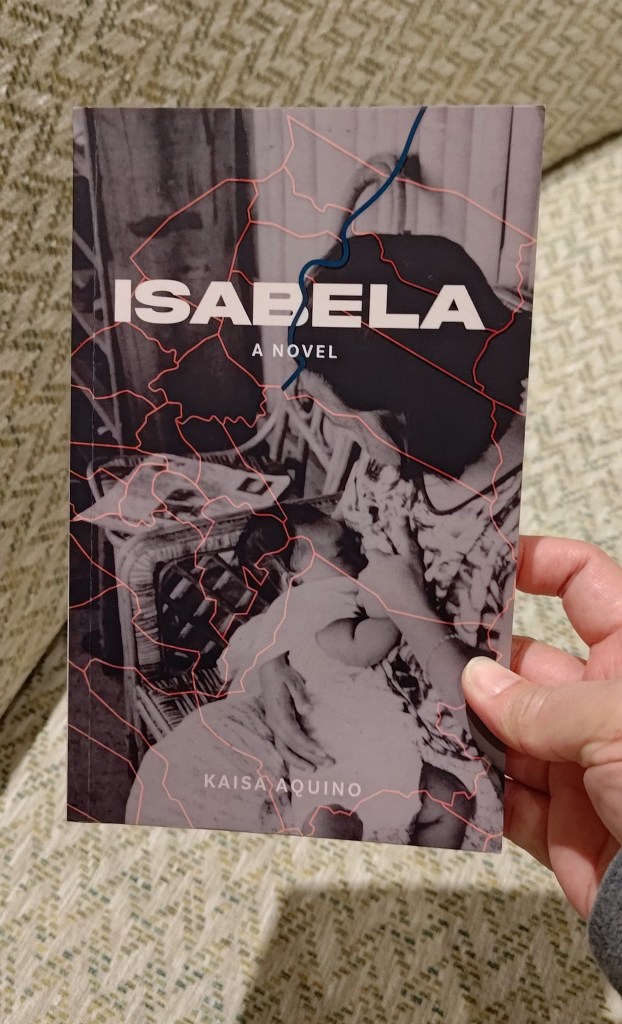
Pero sa pagbabasa ko nitong unang nobela ni Kaisa Aquino, bigla kong na-realize na ang bawat kilos natin, may impact pala sa tao na hindi natin aakalain. Itong ambag nating social activism, maybe big or small, ay humuhubog sa ating pagkuwestiyon sa “ok na to!” ng kasalukuyan. Gusto nating pareho ng pagbabago, pero hindi natin kasingtapang ang mga namumundok. Gusto nating labanan ang mga demonyo, pero sa dami ng nasa paligid, tila bumabangon tayo sa bagong apokalipto. Kahit yung pinupush kong “shaping pinoy literary landscape, one story at a time” kineso hindi ko basta i-lezzggooo! Mahirap kapag ang sistema, nakakapit pa rin sa galaw ng salapi, sa mga “what’s in it for me?” at sa iba pang mekanismo ng kaperahan at kapitalismo.
Binigyan ako ng hopecore malala ng mga kabanata ng Isabela. Dito kasi, binigyan nya ng boses ang mga babaeng umiikot sa mundo ng pag-aklas. May mga mas matapang sa akin na tinamaan na ng bala, may mga chill lang na propesora. May mga burgis din na gusto lang mag-rebelde noon, pero de-kalibre ang network ngayon. At may katulad kong nagta-trabaho, pero may kipkip na kagustuhan ng pagbabago sa bawat pagbangon. Grabe dok, my crying time and my hormonal rage biglang nagpi-peak nang hindi ko akalain! Sobrang naka-relate ako sa kwento ni Belay at Balong, kasi yung bonding ng magkapatid nakita ko yun sa amin ni Kuya. Sobrang nainggit ako sa kwento ni Celine at papa niya, kasi alam nating pareho na hindi ganun ang tatay ko. UP Graduate lang yun si Papa, pero isa siya sa mga naki-network sa mga heneral para pumaldo, bago ipang-casino. Lol biglang pumakla, sorry dok. Pero sa bawat kwento ng Isabela, tinutunton ako sa mga lugar na malayo sa galaw ng aking propesyon. Tila lumiliit ang lente sa pagtikatik ng keyboard at hum ng standing desk, at mas tinatanong ko ang sarili: Kaya ko pa bang sumigaw ng paghihimagsik kung ang mundo ngayon ang mismong sumisikil sa aking tinig?
Kasi, kung aklas rin lang naman, tbh, count me out. Hindi ko kaya malayo sa danas ng peti-burgisan. Hindi ko kaya magbitbit ng armas at pumunta sa kanayunan. Hindi pa bayad ang aking mortgage, at hindi ko pa nakukuha ang retirement. So kapag ako’y biglang ma-redtag, baka forever na akong maging pipi online at offline. Hindi ko rin masisisi ang mga Raphael / Apa sa nobela. Kasi hindi ko personally alam ang tindi ng dahas ng mga taong armado. Nakarating na ako ng abroad nito, ha! Paano pa kaya kapag binabasubas pa ang maliliit na tao?
Kaya katulad mo, minamahal natin ang bayan sa paraang alam natin pareho: tumutulong kapag may delubyo ng bagyo. Proud ako sa tapang ni Kaisa na ikwento ang iba’t ibang anino ng hinagpis kapag hinahagupit ng bagwis (ng bagyong Harurot): ang pagkawala at bawat pagmulto ng ating mga mahal sa buhay. Even the aftermath of grief is being written poignantly through Celine’s everyday.
Tapos dok, di ba napanood mo na yung Kimi No Nawa? Yung magic ng timeline jumps and long distance connections? May magic din yung libro! Hindi sya tuwiran, like speculative fiction ah, pero yung mga pangalan nila magkakarelate! Parang akong meme (yung manong na may mapa sa likod nya!) nang sinubukan ko ilista ang mga tauhan at paano sila nagko-connect. One example na yung mga Raphael at mga Caloy sa iba’t-ibang kabanata, pati yung mga Isang / Issey / Sabel / Belay! Akala ko, iisang tao sila, hindi pala! Parang echo lang — iba’t ibang pagkatao— but for some reason, pare-pareho ang nagiging life decision. Hindi ko mai-explain nang maayos, haha! Basahin mo na rin kasi! Puru ka kasi high fantasy eh. Kaya tayo hindi nagkakaroon ng buddy read kasi magkalayo ang genre na binabasa natin.
Saludo ako kay Kaisa rito, dok. Kapag natatanong ko sa sarili ko, anong ambag ng isang akda sa pambansang panitikan, eh medyo malaki ang ambag ni madam. To think na kapwa babae din sya huhu, #AbanteBabae! Lavarn pak ganern she is contributing another resistance piece for us to stop look listen and learn! Eme!
Dito na lang muna, ang OA na ng liham ko sa haba. Book review talaga ito dok, hehe. Pero kung mababasa mo man, pakituldukan. Bago tayo magbangayan. Tuldok mo lang masaya na ako, char. Pero gusto ko rin magpa-baby, abah! Hindi yung forever akong hyperindependent strong woman of the nation! Ako ay tao rin lamang at naghahanap ng labing-labing.
Hopefully soon, ang mame-message mo, “Malapit na ako bb pauwi na ako.”
Drafted Poem for Literary Tuesday of Mountain Beacon; Didn’t push through since I really sucked at Poetry.
Mula opisina Tangan ang rosas na nag-iisa Habang binabata Ang dibdib sa paggala Mula BGC hanggang Roma. Hindi ko kinaya Ang puyat at pata, Kaya napilitang pumara Sa traysikel, una nyang pasada.
Na-realize kong hindi ako marunong tumula…
Nakakawili lang na Ang tema ay bulaklak sa akda, At ako’y kumukuda Habang ang rosa Ay nakasalpak sa bagong labada, Mabangong suotin
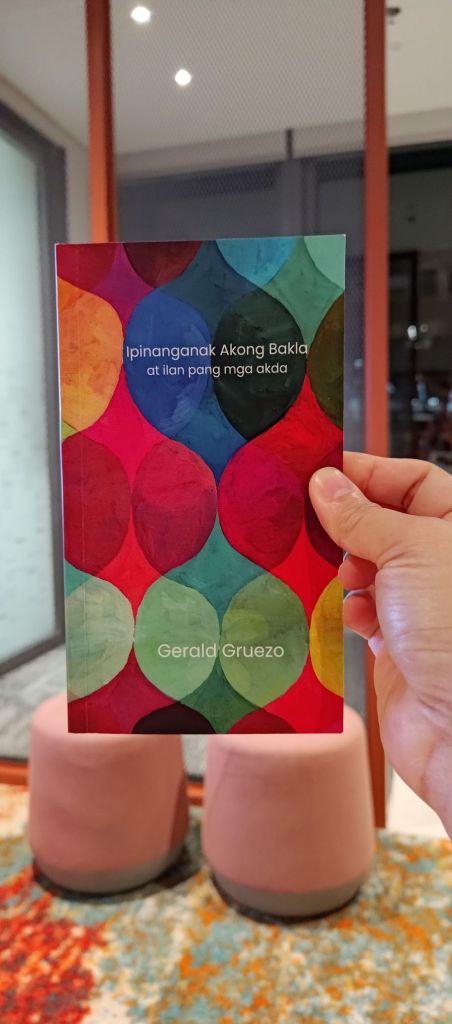
Book Review of Gerald Gruezo’s Pinanganak Akong Bakla at ilan pang mga akda
Nakakabitin!
Tunay ngang patikim ang mga akda niya rito sa litol chapbook niya! Maraming salamat sa Akdang Pinoy dahil nanalo ako sa raffle nila, at plano ko sana itong ipa-raffle papunta sa ibang interesado ng kanyang mga akda, because sharing is caring! 😉
Limang titulo ang narito. Yung unang apat, kwentong buhay niya. Pagpapakilala niya, ganun. Catchy ang unang akda kasi andaming em dash— alam mong madaldal siya sa personal (with lots of social media channels, andami nga niyang nagiging engagement!). Isa pa, parang nakapagbasa ka rin ng blog entry sa Una at Ikaapat niyang entry sa libro. Yung ikaapat, sobrang conversational. Bigla kong naalala ang Unang Reglang kwento ni Beverly Wico Siy sa una niyang Koleksyon na It’s a Mens World. Ang galing lang.
As a geriatric millennial, I recommend the teenagers and younger GenZ demographic to try his works. Lalo na yung huli niyang entry dito na pinamagatang “Unang Kabanata”, kasi promising ang fiction. Pwedeng pocketbook na folklore, pwede ring tungkol sa mga kwentong bayan ng Quezon (kung saan siya lumaki). Sana masubukan nila basahin ang libro (kahit limitado ang kopya, baka naman may reprint ang Balangay in the future di ba?)
I also would like to commend Balangay Productions as the publisher kasi ang ganda ng kulay ng pabalat. Nakakahalina. Pati yung print ng font at ang edit ng mga gawa, malinis. #SanaAll aesthetics is life, charot. Kapag nag-reprint ito, wagi ang mga followers ni @geraldthebookworm for sure!
Published in the Literary Tuesdays of Mountain Beacon
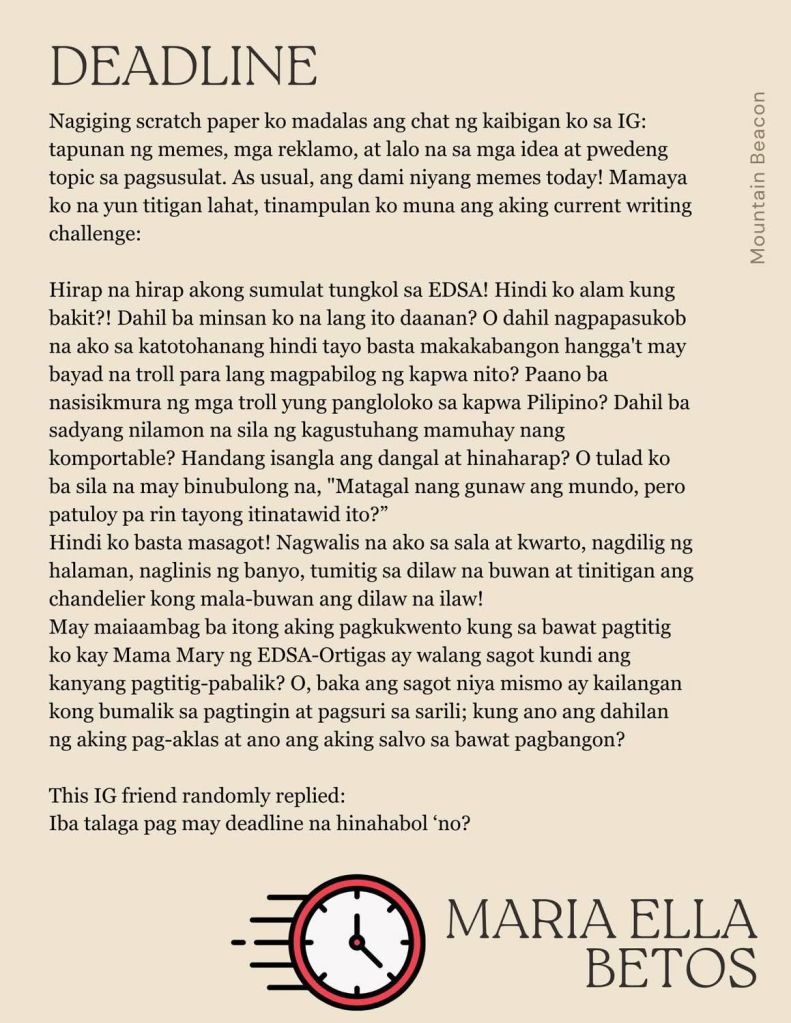
Nagiging sratch paper ko madalas ang chat ng kaibigan ko sa IG: tapunan ng memes, mga reklamo, at lalo na sa mga idea at pwedeng topic sa pagsusulat. As usual, ang dami niyang memes today! Mamaya ko na yun titigan lahat, tinampulan ko muna ang aking current writing challenge:
Hirap na hirap akong sumulat tungkol sa EDSA! Hindi ko alam kung bakit?! Dahil ba minsan ko na lang ito daanan? O dahil nagpapasukob na ako sa katotohanang hindi tayo basta makakabangon hangga’t may bayad na troll para lang magpabilog ng kapwa nito? Paano ba nasisikmura ng mga troll yung pangloloko sa kapwa Pilipino? Dahil ba sadyang nilamon na sila ng kagustuhang mamuhay nang komportable? Handang isangla ang dangal at hinaharap? O tulad ko ba sila na may binubulong na, “Matagal nang gunaw ang mundo, pero patuloy pa rin tayong itinatawid ito?” Hindi ko basta masagot! Nagwalis na ako sa sala at kwarto, nagdilig ng halaman, naglinis ng banyo, tumitig sa dilaw na buwan at tinitigan ang chandelier kong mala-buwan ang dilaw na ilaw!
May maiaambag ba itong aking pagkukwento kung sa bawat pagtitig ko kay Mama Mary ng EDSA-Ortigas ay walang sagot kundi ang kanyang pagtitig-pabalik? O, baka ang sagot niya mismo ay kailangan kong bumalik sa pagtingin at pagsuri sa sarili; kung ano ang dahilan ng aking pag-aklas at ano ang aking salvo sa bawat pagbangon?
This IG friend randomly replied: Iba talaga pag may deadline na hinahabol ‘no?
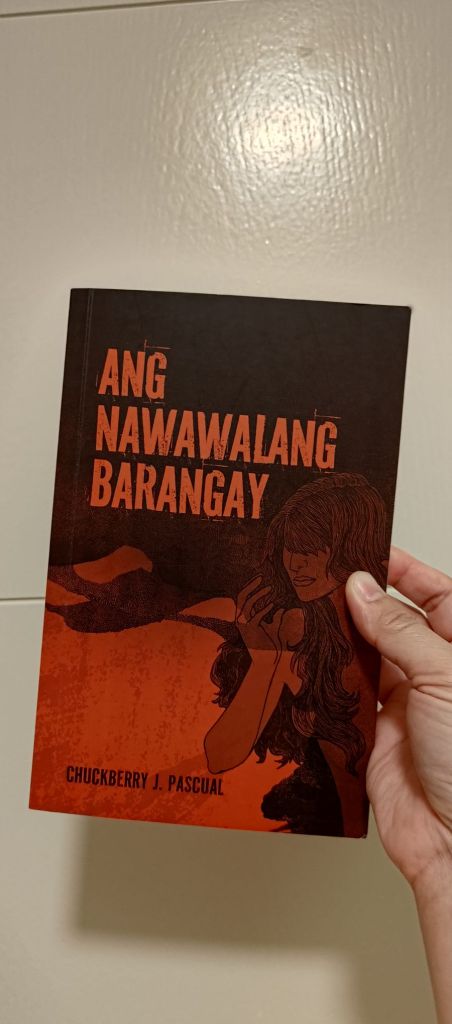
Book Review of Chuckberry Pascual’s Ang Nawawalang Barangay
At first, I thought this would be a usual novel with a straight-forward conflict, resolution, and ending; it is only after rereading Ms. Carolone Hau’s blurb that I realized sir Chuck’s brilliance in storytelling:
Darkly comic, sharply observed, and perfectly pitched to capture the living language of our times, Chuckberry J. Pascual’s Ang Nawawalang Barangay explores the politics of despair and disempowerment, the dark allure of religion and social media, and the neccessity of resisting the angels when they whisper, “Swalla. Sa wala tayo nagmula at sa wala rin babalik.”
Initially, I was confused at the way the story unfolded, because the world-building felt out of reach. Siguro sadyang ganun ang estetiko ng Malabon— malayo sa Kapasigan, mas malapit sa Bulacan. Pero kung tutuusin, ang Talong Punay ay nakakaranas rin ng mga araw-araw na kalakaran ng barangay: may “bureaucratic” galawan, lumang parapernalya at kagamitan, may salon sa gedli at may tindahan ng ulam. Bree’s barangay is also like the Pembo where I grew up. Ang cute lang kasi andami mang kakaiba sa kanila, meron ding pagkakatulad sa kinagisnan ko.
Nag-dawn lang ang diwa ng nobelang ito sa mismong Big Night scene. Hindi ko alam, pero mula nang mabasa kong nagpakita si Donya Mary Juliet, parang biglang pumasok sa imagination ko na kamukha niya si Cynthia Villar: may mga alipores at nakasipat lang sa malaking barangay na pwede gawing subdivision (like Las Piñas), tapos yung stage ng mga sumasayaw kineso ay parang yung Guadalupe-EDSA overpass, looking at the squatter’s area ng Guadalupe Viejo looban burned to dust— na ngayo’y binakurahan na ng SMDC (katabi ito ng seminaryo sa Guadalupe-EDSA; hindi ko na tukoy kung dere-derecho na ang pagtayo ng condo dun, kasi andaming Pending Class Action sa korte dahil sa laki ng sunog na nangyari).
Ang ganda rin ng paraan ng pagku-kwento ni Chuckberry. Tukoy mo na boses niya! I don’t know why I haven’t sensed it in his earlier works (Ang Nawawala short story collection), but maybe mas nagiging buo yung tinig niya kapag mas mahaba pa sa maikling kwento ang katha.
Ang galing! Excited na ako sa magiging Book Talakayan namin tungkol dito!
I saw these people and they seem to mock me at my introduction with this newest director in the office:
“Hi, I am Ella. And I am humbly bragging that I am the first woman that US onshore team hired in Managed Platforms Services — and still not moving about! If I am not a banker, I will be a writer — Shaping Pinoy Literary landscape, one story at a time.”
Masama kaya ang magkaroon ng ganoong klaseng vision sa mundong ginagalawan ko? Pasalamat nga sila hindi pa ako nagre-resign eh. I protect my work-life balance because I don’t want to be like them: working long hours and getting hungry, and for zero net benefit. Puyat ka na nga, surang-sura ka pa.
Goodness, I am even underpaid at this point! CPAs within my circle are the leads of professional diaspora and brain drain. Exploring Singapura, Malta, and Luxembourg! Those who stayed have other mouths to feed because they chose to have it so, and yet, they flourish in their respective family lives.
Bigla kong naiisip yung si Nase, the “Pinuno” behind the Ppop sensation. Way back before 2016, he went to UP and attended that Phil-Korean Friendship Summit, came out with a passion and a purpose: na sana, ang Pilipinas ay parang South Korea. Namamayagpag ang export ng sining at kultura, at nagiging source ng turismo ang bawat kanta.
Naisip ko, ganito rin ba ang naiisip nya nang sumubok sya sa auditions ng ShowBT? Habang nilalagari ang paghahanapbuhay bilang Corporate Slave at paghabol sa pangarap, paano siya lumapit sa mga kapamilya niya para lang maging dedicated sa kanyang craft? Pareho naman kaming may suntok sa buwan na purpose sa mundo ah! Hindi naman siguro masama yun. Gusto ko rin ang reach ni Bob Ong mismo! Si Bob Ong na malakas pa rin ang hatak sa mga mas batang henerasyon, ang humubog sa millenial generation sa pamamagitan ng pagkatha ng iba’t-ibang istilo ng pagkukwento.
“Shaping Pinoy Literary landscape, one story at a time.” May mga araw talaga na feeling ko hindi na ako meant dito sa workplace, pero I cannot afford to leave. If that guy has a family to go back to— I don’t. I honestly don’t. In a world where there is class A employee who can simply retire and be a stay-at-home wife, I cannot afford to fail. Heck, I cannot even afford to marry and have a kid! I am old to birth a son, too old to date men poorer than what I earn, and I am heaving in this long apocalypse of hyperinflated prices and a hyperventilate-inducing anxiety.
Gusto ko lang kumuda nang ganito kahaba para lang mawala na ang pagkaasar ko sa tingin ng mga tao sa akin na hindi naniniwala sa pagpapakilala ko sa tao. Kung ayaw nila maniwala, eh di hatdog sa kanila. Basta ako, may purpose na ako. Ito ang paraan ko ng pagbuo sa sarili ko at dahilan sa bawat pagbangon.
Noong elementary kami, pinagsulat kami ng tula sa schoolpaper tungkol sa diwa ng EDSA. Apat kaming gumawa ng korido na pinuno ng pagtutulad at metapora, tapos may dalawa pang additional entry na solong gawa. Nang maipasa yun ng teacher namin sa DZRH radio, naging segment pa ang aming likha na ibo-broadcast ng Sabado, alas-diyes ng gabi.
Mahirap ang recording pala. Paulit-ulit. Hindi namin alam ang magiging tunog namin sa airwaves. Kaya nang sinabi ng host na dapat may bigat ang pagbigkas at may alimpuyo, nailabas ko lahat ng hugot at practice ko sa sabayang pagbigkas. Nang marinig ng pamilya ko ang broadcast, nagulat din kami kasi parang tunog ng galit na umiiyak ang naitula ko. Hindi ko ni-recite ang tulang likha ko; tula sya ng kaklase kong hindi makakarating sa araw ng recording. Ika nga, backup vocal ako. Ang tula niya ay pagkukwento ng mass movement circa ’86, kung saan nag-krus ang mga manggagawa at mga sundalo na tila aso’t pusa, at may isang bathalang saksi na hindi mawari kung ito ay tutulong o hindi.
Ngayon, hindi na ako mahilig mag-radyo, kasi napakadaling access na ang spotify at youtube para sa mga video podcasts at tugtog. Natunaw na ang pagba-bonding sa radyo. Tila katulad na rin ito ng pagtunaw ng diwa ng People Power: nagkawatak-watak, naghati-hati, at ang Mama Mary sa EDSA corner Ortigas ay nakatunganga lang… at nananatiling saksi.
Published in the Literary Tuesdays of Mountain Beacon
Code Blue
My beloved is loving again. Not with my letters. Not with my pictures. But with that Emergency Room.
Again.
SLEX
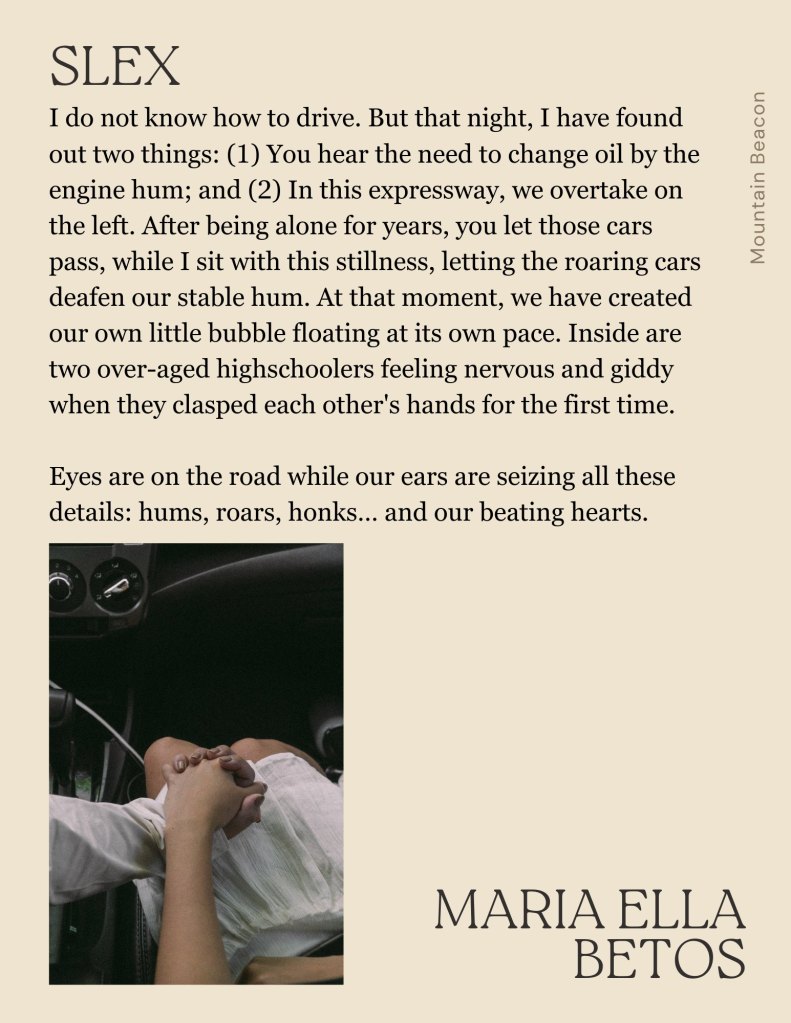
I do not know how to drive. But that night, I have found out two things: (1) You hear the need to change oil by the engine hum; and (2) In this expressway we overtake on the left. After being alone for years, you let those cars passed, while I sit with this stillness, letting the roaring cars deafen our stable hum. At that moment, we have created our own little bubble floating in its own pace. Inside are two overaged high schoolers feeling nervous and giddy when they clasped each other’s hands for the first time.
Eyes are on the road while our ears are seizing the all these details: hums, roars, honks… and our beating hearts.
Talking Stage
What constitutes a good conversation? Up to what extent should a talk be THE TALK? Are scheduled questions enough? Are daily updates sufficient? Should we engage in outpouring our sentiments EVERY DAY?
It is what it is — a routine. A breakout from banality of being Corporate Slaves (capitalized, because CAPITALISM). We do not have to be hipsters and expound the question of: “Kumain ka na ba?”
Come on! Yes, we do crave connections, but what if the other side is not as eloquent as you? Do you demand an answer in a form of: “I see a couple focused on their phones as they eat and drink, seeking connections from faraway distances, rather than focusing on what’s 5 inches beyond the handheld.”
Tita na ako kaya HUWAG KANG OA. “Mamaya” is good enough.
Published in the Literary Tuesdays of Mountain Beacon
Sa wakas, magkasama na tayo. Kasabay ng pagsikip ng Ongpin ay ang pagpasyal sa Cafe Mezzanine. Excited na akong matikman ang xiao long bao! Ako ang iyong Fire Tiger —matapang, malakas ang loob, at puno ng sigla. At ikaw ang aking Water Pig —kalma, mapagbigay, at mabait.
“Hindi pa rin ako makapaniwala na nandito ka na,” sabi ko, medyo matinis pa ang boses dahil sa labis na kilig. Noon, hanggang messenger lang ang usap, at hindi ko akalain na darating ang araw na magkakasama kita sa isang mesa. Ngumiti ka, kalmado ang mga mata. “Worth it lahat ng paghihintay,” sagot mo, habang hinahalo ang hot and sour soup.
Ilang sandali ng katahimikan—hindi dahil sa kawalan ng masasabi, kundi dahil sa lalim ng ating pagkakaintindihan. Ang apoy ko nasusupil ng malamig na tubig mo, at ang tubig mo ay pinapainit ng kasiglahan ko. Sa bawat kagat ng dumpling, sa bawat tinginan, batid natin ang dating layo ng distansya ay natunaw na—katulad ng mantikang bumabalot sa ating mga labi.




 mariaellabetos.com