Tales of the Corporate and the Synergy of Reader Experience

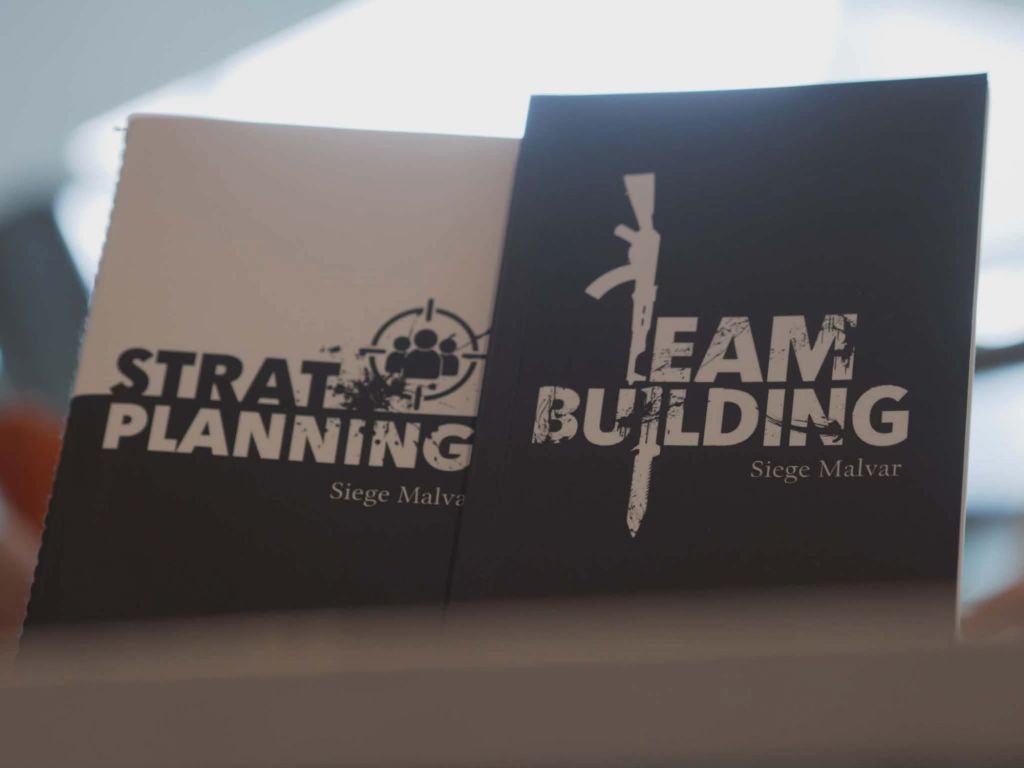
PRPB’s Book Talakayan of Siege Malvar’s Team Building and Strat Planning

One of the most interesting interviews I’ve done so far happened last Sunday, June 28th at The Stacks, One Ayala. I’ve interviewed several authors before and usually ask about their writing process and the ideas behind their work. But this was the first time I got to interview an author whose books I had actually given a 1-star review. As a critical reader, I felt that I still owed the books—and the author—honest but respectful questions about 𝘛𝘦𝘢𝘮 𝘉𝘶𝘪𝘭𝘥𝘪𝘯𝘨 and 𝘚𝘵𝘳𝘢𝘵 𝘗𝘭𝘢𝘯𝘯𝘪𝘯𝘨.

We started the discussion with the usual introductions of Pinoy Reads Pinoy Books, its vision to champion Filipinos and their writing, and engagements to the third spaces. Then I asked the audience to introduce themselves with their names, and the water bottle brands they carry. A water bottle is an important belonging to every Pinoy nowadays, and it was also a very important plot device in Siege’s books.
With my tablet, I crafted the questions in “corporate speak”, a language representing different departments of an enterprise. After all, Siege’s Linkedin profile mentions, “sell stories, weaponize truths, and create blueprints for communication”. Using root-cause analysis, I asked the first question, as if “relayed by the Research & Development Department”, and the author said that it was the real-life tragedy that inspired Team Building.

The story came from a deeply personal experience: while attending a company team building outside Manila, his father passed away. On his way home, the van he was riding in got into an accident with a motorcycle, leaving him stranded for hours while waiting for another vehicle. Curious neighbors wondered who the lone passenger was, if he was a politician or an actor avoiding the public, without realizing he was simply grieving. That tension between personal loss and the corporate expectation of building a “family” became the seed for what I like to call his Corporate Cycle Novellas.
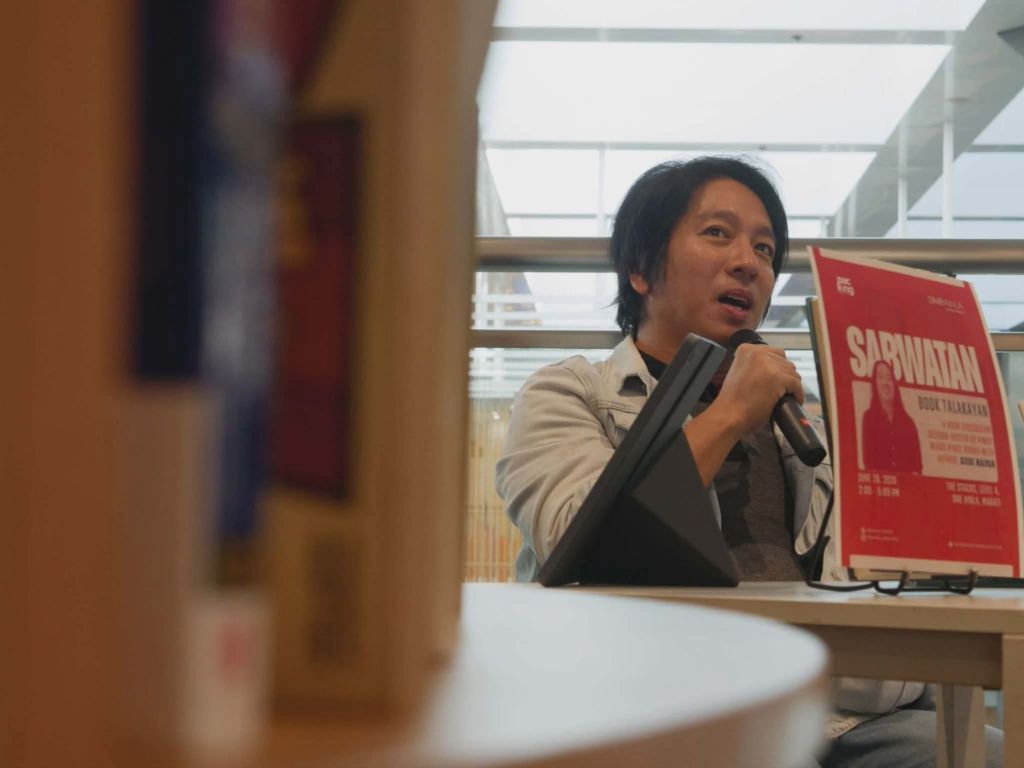
I also found it interesting that despite never becoming a fellow in any national writers workshop, he’s very open to literary criticism. He doesn’t see criticism as an attack but as part of the conversation between a writer and different kinds of readers. It was refreshing to hear someone speak so openly about receiving feedback, especially after reading works that I personally didn’t enjoy.
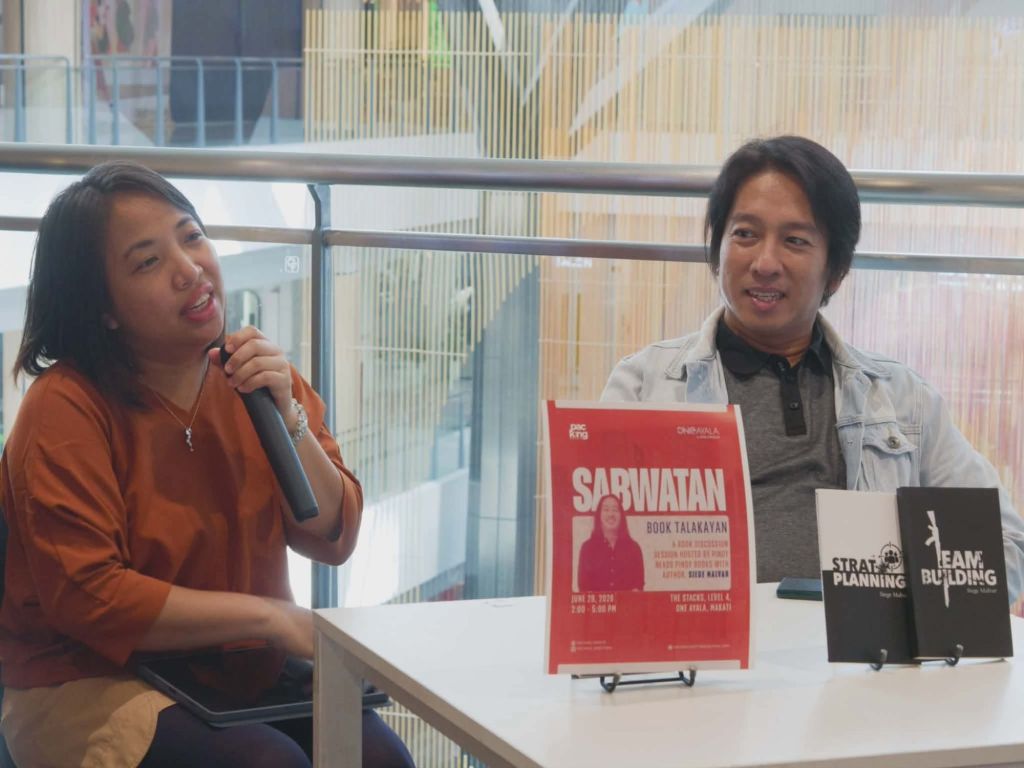
Talking to him also reminded me that authors are often more layered than the characters they create. “As relayed by the metrics of the Human Resources”, I jested, I asked his current state from the spectrum of Sue to Mindy: Sue being the ruthless to people in the team while on the other end, Mindy having the patronizing maternal kindness. He mentioned that in real practice of his career, he is the whole spectrum: he could be as ruthless as Sue and as nurturing as Mindy, which made me appreciate how much of himself he had poured into these stories. He asked me the same question, using the same spectrum. I bluntly answered back with a 95% Sue, while my 5% humanity is poured outside of the Corporate — which is this book club. Perhaps it was also a personal wake up call to treat every encounter with kindness and compassion, even after giving his book a one-star review.
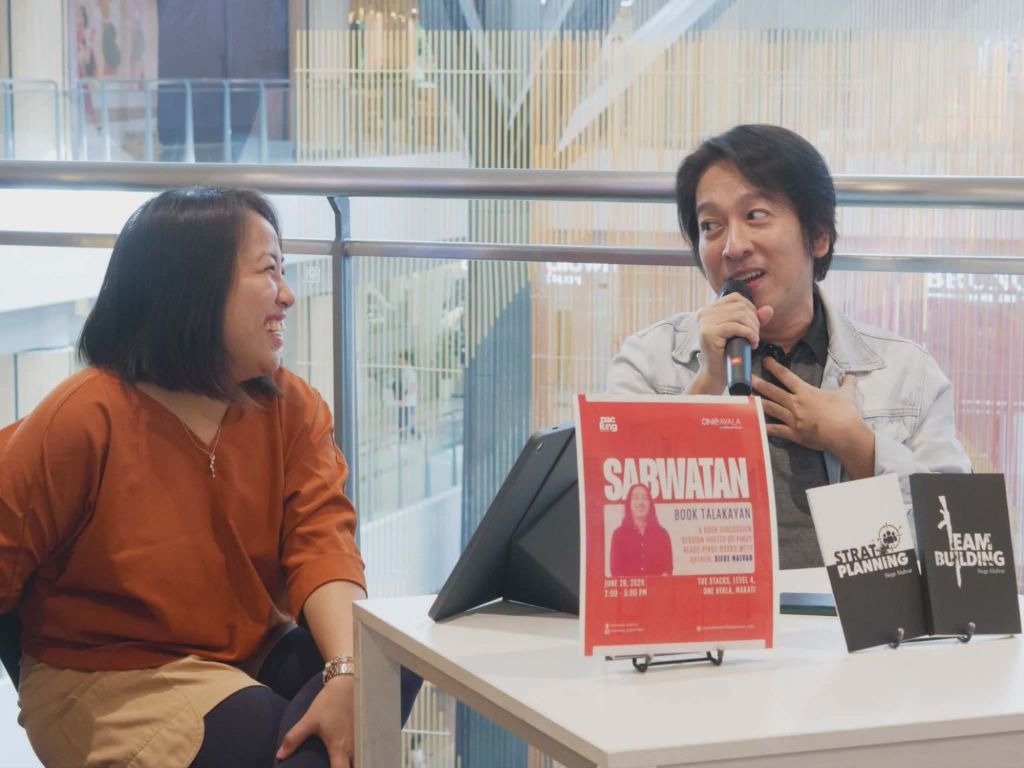
Coming from the Ethics and Governance commitee, I asked, “What haunted him the most about these two novellas?” I expected him to bring up the people within the novellas. That can be the mecha elements overriding Manny Conda’s physicality, or Oliver’s struggle with dissonant psyche (because of the comfortable lifestyle) or even about Miggy’s losing mental capacity (with increasing amounts of administered medicine). I even prompted him, that maybe the island’s mysticism can get him sleepless for a bit. Instead, he pointed to one line from Mindy: “Ang pagtatrabaho nang marangal sa Pilipinas ay araw-araw na pagtaya ng buhay.” That answer completely reframed the conversation. Mindy’s one-liner distills the novella’s central thesis: that for many Filipinos, earning an honest living comes at an unbearable human cost. It also encapsulates the books’ ethical ethos—a persistent interrogation of the systems that demand dignity while making survival increasingly inhumane.
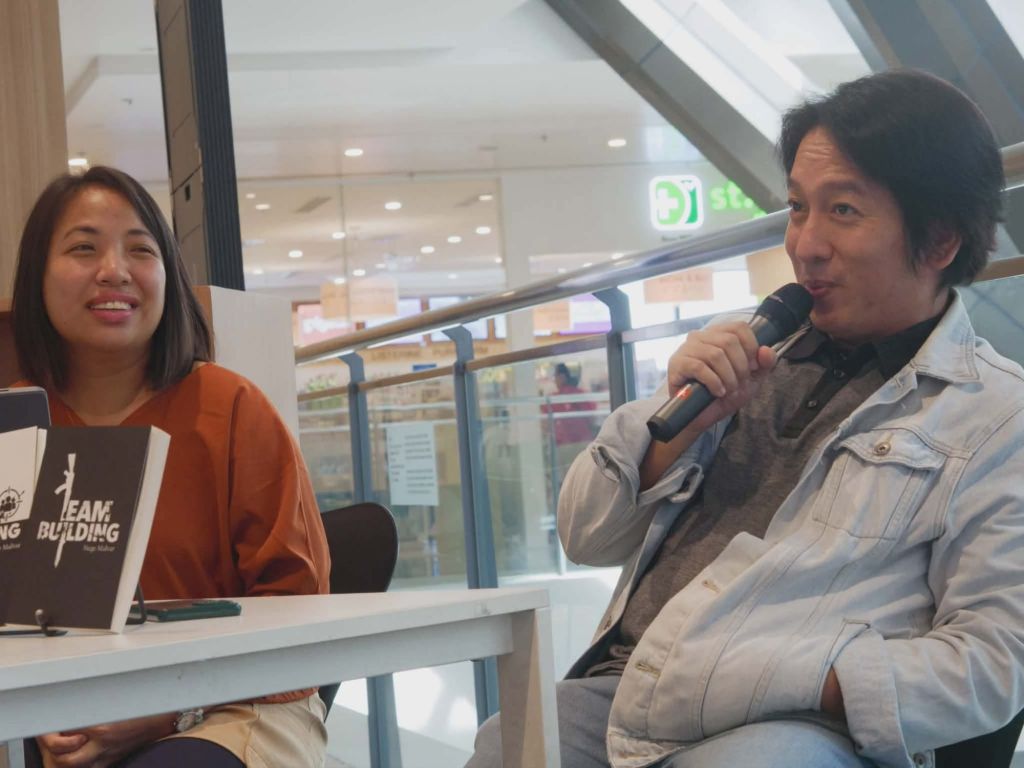
I asked Siege about his roadmapping (“Because the Office of the President asks me so!”), and he shared that he’d like to conclude the Eskinita Imprint as a trilogy, the third novella covering other explorations of characters and their respective arcs. He added that discussions are ongoing with 19th Avenida Publishing about possibly releasing an omnibus edition of Team Building to further expand the universe of PhilNutrition, Inc.
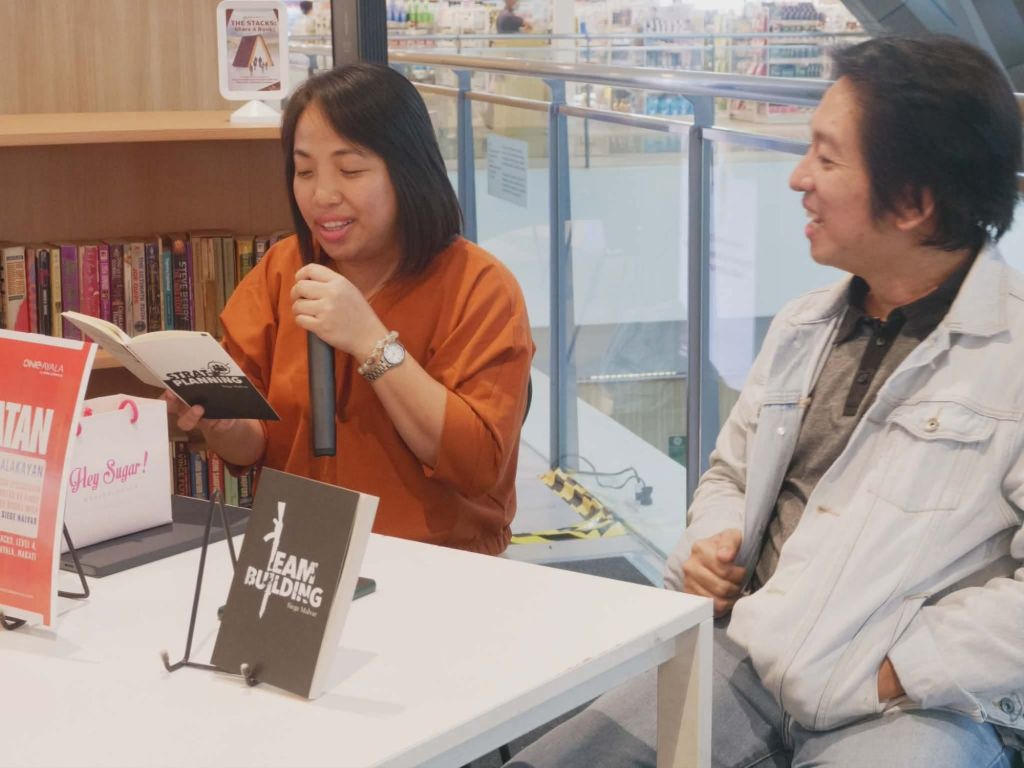
We ended the interview by giving him a faux Owala water bottle—a fitting way to wrap things up, considering how symbolic it is in the novella. It’s a plot device, a marker of social status, and perhaps the most practical reminder of all: stay hydrated while surviving the chaos of corporate life.
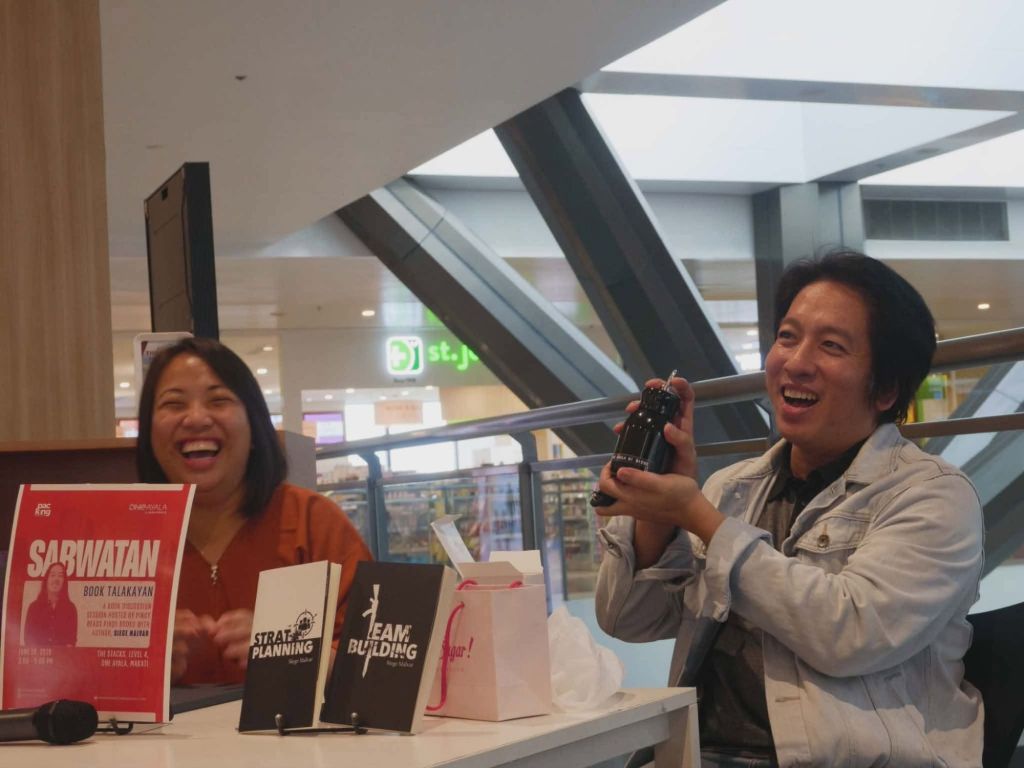
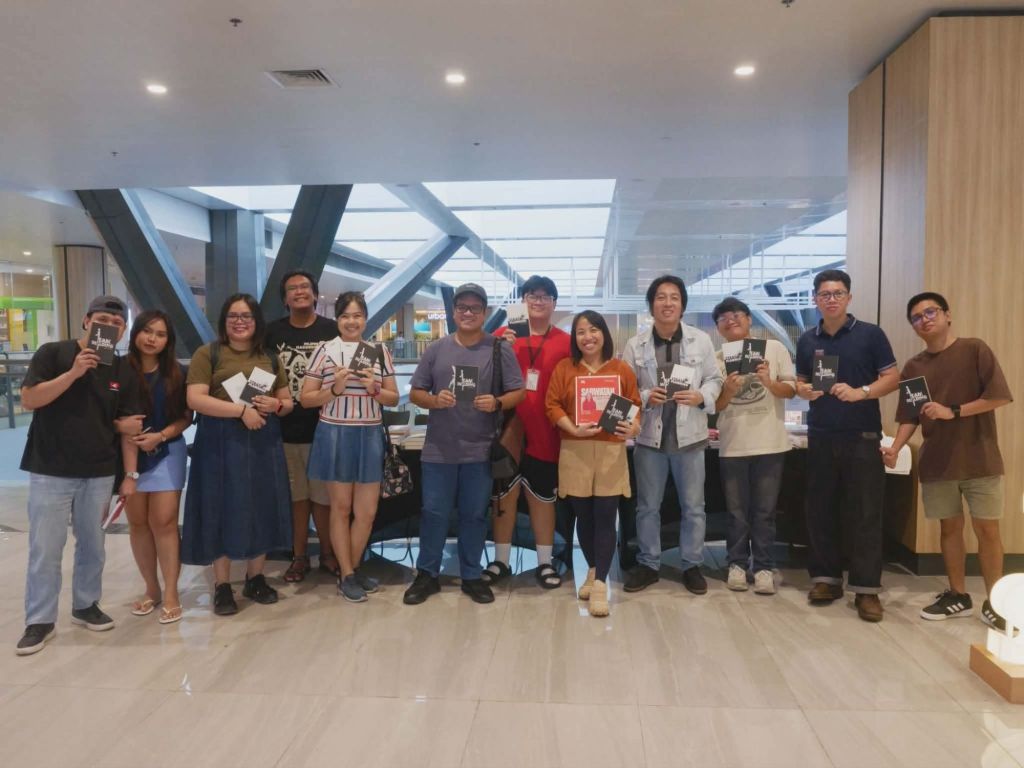
Pinoy Reads Pinoy Books is deeply grateful to Packing Sheets, 19th Avenida Publishing, and One Ayala for making this Book Talakayan possible.

Filipinong Southern Tagalog

Henlo Jesson,

Kumusta ka jan sa Norte? Random: alam mo bang may aklat ng mga tula na galing sa lalawigan mo? Ay kainaman nga! Kailangan ko lagi ng Diksyunaryong Pilipino para lang malaman ang kahulugan ng mga parirala at saknong. Na-realize ko lalong wala akong probinsya. Pinanganak sa Pasay, nag-aral sa Makati, nagta-trabaho sa Taguig, at kasalukuyang nakatira sa Pasig. Mga probinsyudad noong dekada nobenta na naging melting pot ng wika at mga memes at code-switches.

Pero sa koleksyon na ito, parang akong bumalik sa high-school required reading na may trabaho ang paghahanap sa kaluhugan ng mga talinghaga. Bigyan kita ng sampol:

POSIBILIDAD
(ni Brixter Tino)

Paano mabalangkas ang paglansag ng tanaw,
ang dungis at ang duklay ng diwarang dahilan?

  1. Mga kelangan ng diksyonaryo — lansag, duklay, diwara. Tatlong salitang hindi ginagamit sa NCR. Ay kainaman! (sabi nga ni Mama, ang Batangueña)
  2. Pag-unawa sa metapora (ang galing, pwede palang tula form ang mga tanong sa buhay!) — I digress, bobo ako sa tula at ito ang unang impression: “Paano raw isusuma ang watak-watak na mga pananaw at ang rawness (the “dungis”) at ang hifalutin (the “duklay”) na mga mabusising reasoning (ng tao ito siguro?).” Through possibilities. Galing!!!

Maganda ang mga berso ng tula, pero ang ariba ng diwa, napakatagal. Kaya nakakasura siyang basahin. Pwede talaga ito sa mga estudyanteng sadyang nag-aaral ng linggwistika, or may oras na maghanap sa diksyunaryo, or people who are naturally curious about the work. Sabi ng maraming kumento at blurb sa libro, magaling si Brixter kasi naipon niya lahat ito (at medyo na-intimidate ako sa uniqueness ng #danas niya dito sa kamaynilaan; polarizing kami kasi taal ako ng 🎵🎶 Mahal kong Maynila~🎵🎶).

Actually, malapit na ang Book Talakayan namin dito, July 19 na, sa PUP! Kung bababa ka, magsama ka ng mga friends o bisitahin mo yung Pinoy Reads Pinoy Books tas catch-up naman tayo. Tungkol sa wika o memes o anumang ganap ng mga kanya-kanyang lovelife kineso haha!

Hopefully maka-akyat ako jan at samahan mo naman ako mag-hike sa Ulap! See you uwu!!!

-Ella

Lights Follow (from the Previous Century)

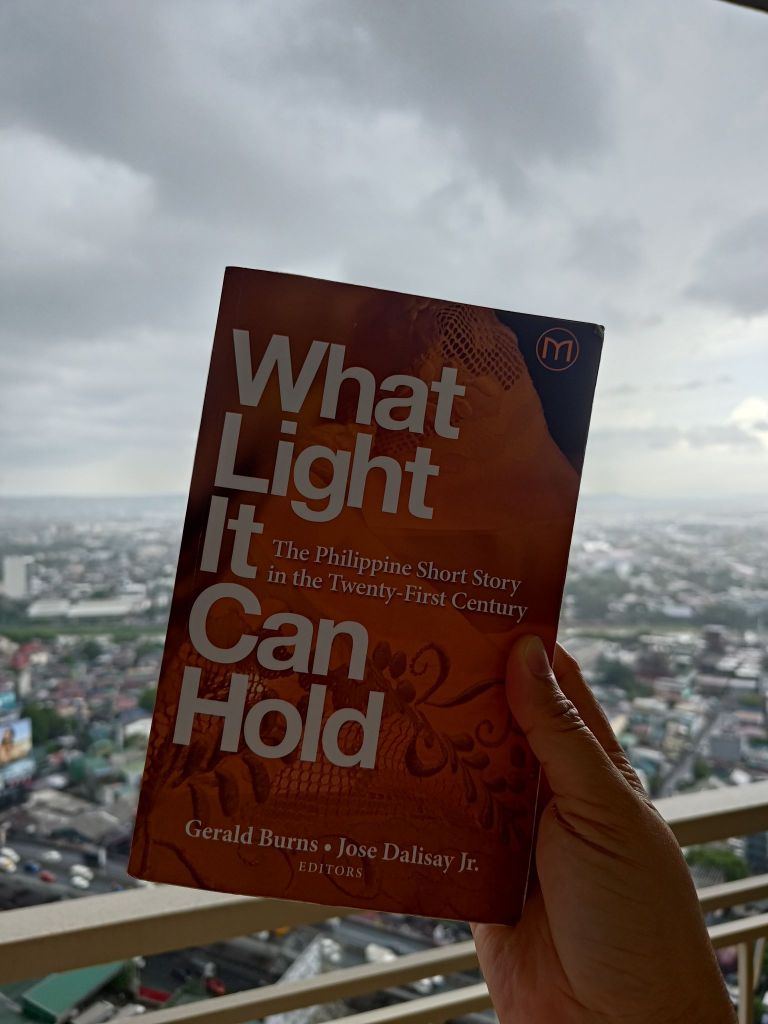
Book Review of What Light It Can Hold Edited by Gerald Burns and Jose Dalisay, Jr.

What Light It Can Hold is a collection of Filipino writers with their stories released after the millenium bug hey-days. I admire the curation, it has representations across the regions and also the male, female and queer demographic (please correct me if I am wrong on this).

I read the collection at a random pace. In one sitting, I read the first and the last story, and in the other days, I pick whatever I feel like reading. The first and the last story indeed tie the theme behind the books title. Casocot’s Things You Don’t know ended in a sunset (or dusk) scene of confessions and a touch of hope, while Groyon’s The Haunting Martina Luzuriaga ended with a new day with its sunbeam erasing the sad past and an epiphany after years of solitude. I appreciate how endings and beginning weave through these respective stories. As the introduction alludes, the book echoed the idea of fragility and illumination.

What I find challenging (aside from my daily Corporate grind) is the search for the contemporary themes that seem to be limited across the collection. I was actively looking for the use of social media, online bullying and cancel culture, the emergence of memes, bekimon vocabulary, or even some snippets of millennial activities of undeground indie bands, collective jogging, and heavy use of technology, or bitcoin grind. Where is the onslaught of the 2008 Financial crisis, or even scamming via Multilevel Marketing? Though the stories are okay with its overarching themes of injustices and powerplay, family bonds, or Love, maybe I was actively reaching for a distinct flavor of a craft (being a millennial myself, overusing parenthesis, oxford commas and em dashes — a punctuation politically being a pet peeve by AI detectors).

What the collection showed me instead are remnants of the B-type movie from 80’s (Tenorio’s Monstress), or early 90’s sea travels (Pagliawan’s Manila-Bound), or late ’90s elementary school bullying (Habana’s The Mop Closet). All of them are marvelous on their own ways — especially the moniker “Monstress” — but these allusions are not in 21st century, but rather, they are remnants of the previous one being carried by the writers themselves. The only hallmark 21st century storyline for me personally is seething through Bengan’s Armor and his storytelling of the Davao Death Squad conflict (if I may say so).

I do hope that there will be another collection that can tackle the more recent events or timelines, or maybe the pens respsonsible for them belong to us now, the contemporary consumers and players of the post-pandemic hyperrealities.

For now, I soldier on.

My question after seeing the dark skies and its looming heavy rainfall

A Little Letter A Minute After Three

Hello, what is Meta Professional mode? I just intend to keep the followers and friends from the past to be updated with whatever’s happening with me. Suddenly, tadah! There are offers for ads and “subscribe to Meta Verified”.

How is me, you wonder? Heto, pagod.

In the wee hours of morn, I am eating my leftover ramen while trying my best to finish the books I am currently reading (for Pinoy Reads Pinoy Books and Nakita sa Booksale pero Hindi Binili). I wasn’t able to write creatively at the moment since my mind is vexed from frustrations of the Corporate, topped with difficult Market movements of Late-stage capitalism and looming anxiety of 5 days onsite expected later this year.

I miss my amigas. We only touch-base in our group chats. I miss the PRPB after-parties and/or walwal nights. And I miss the moments when I can just grab my bag and hike Benguet mountain ranges, or go to Palawan to feel the sea breeze. I may live in a “ivory tower” away from the floods, but I am not invincible not to feel lonely (or be out of touch with reality. yet. I guess?)

You can actually see my bogsa moments in my instagram stories, my older entries in my personal website. Tiktok contents are stale. Maybe I can put a video out sometime this weekend.

I hope you are okay, dear friend. I may be TTTHHHHIIIISSSS tired, but I make a point to set a time to destress. I hope you do, too. Take care of your health. With leptospirosis and coughs and colds around us, I hope you get yourself some vitamins. Don’t forget to drink water. And never forget to rest.

Because when we rest, we dream. And the further we dream, we envision.

And then, we rage against the machine.

The Forestry of Fiction

A Book Talakayan of Glenn Diaz’s Yñiga

Last Saturday, September 28, Pinoy Reads Pinoy Books (PRPB) discussed the Glenn Diaz’s second book, Yñiga for our Book Talakayan for the month. A contrast from the previous months, the book was a bit heavier on theme and discussion was done more intimately. Nontheless, we were able to spark the interest of our new book club attendess to chime in and get personal with the author about how he created the novel, its underlying themes and the process of building its series of events. We held the discussion in Harong Cafe, the headquarters of the Human Rights and People Empowerment Center (HRPEC).

We opened the discussion with the introduction of the new joiners, letting them say their horoscope signs and names of their pets if they have one. Like Yñiga who leans more on the horoscope, I prefer to know the demographics of the attendess so that I can leverage the temperament of the discussion.

The first question that comes to mind: how did the book emerge? Glenn answered that his second book is a manuscript out of his doctorate thesis from University of Adelaide, proving that the forest can be a setting, a novel’s design, and a device of discourse about the deep-rooted history of social activism, counter-insurgency, and our personal and collective traumas. “It’s like another thesis defense again!” Glenn gasped, as he talked about the Qualitative and the Academic nuances of the novel before traversing the creative pursuit. As an accountant with no experience in presenting qualitative thesis, I found this fascinating.

Unlike the first novel focusing on interweaving narratives, Yñiga focused more on the interweaving of timelines and in its spiral prose style. Glenn honestly mentioned about the thought process of trauma, quoting Lenin, “one step forward, two steps back.” The discussion was like paving a new walking path to the forestry of Glenn’s fiction, as Yñiga’s winding narrative requires patient exploration. Readers have to weave through the long paragraphs and sentences that doesn’t explicitly show if one is an internal dialogue or otherwise. Glenn trusted the readers to navigate the slow-burn prose. He candidly said, “Yñiga is like an edging reading experience”. When asked about memorable scenes, Glenn was personally proud of the “sepia moments”: those cinematic shots of Yñiga’s childhood flashing forward to her present, minutes before the suspense.

The members asked and commented about a different take of feminism in the novel; how the women were very much involved in the community and how it pales their personal relationships. Jayson also mentioned that despite Yñiga being an unlikeable character and being distant to the events that go on around her, and yet it contrasts to the lyrical beauty of the prose. Julian, an editor, mentioned about the sense of community in one of the important events of the novel. Perry asked about Glenn’s experience of putting a logical discourse to a craft seamlessly as this was manifested in the novel. Krystine, a new attendee, asked about the impression of using English as the main language of the novel as this would cater foreign readers more than to fellow Filipinos. Capping the discussion, Kwesi asked what’s next for Glenn, what are some of the project/s he is working on, or if he will write a novel in Filipino.

I closed the Book Talakayan with a jest of the “and so on and so forth”, Glenn’s inflections as a podcast co-host. Some picture-taking and book signing came after. In my mind, this quote from his other work When the World Ended I Was Thinking About The Forest resonated with the day’s book discussion, “I think what I’m trying to do is turn the uncertainty into a clearing; the terror, into a project. (A kaingin.)”

Glenn did it. Yñiga is his kaingin.